









How to Improve Bilateral Breathing in Open Water Without Eye Irritation
Bilateral breathing in open water improves stroke balance and sighting, but eye irritation from algae, salt, or sun exposure can shatter your rhythm mid-race. The fix combines refined technique drills, proper goggle fit, a consistent pre- and post-swim skin routine, and targeted recovery care — so your eyes and focus stay sharp from the first stroke to the finish.
Why Open Water Wrecks Your Eyes More Than the Pool
Exposure Differences Between Pool and Open Water
Pool water is chemically controlled; open water is not. Lakes carry biofilm, bacteria, and organic matter, while ocean swims add salt and UV reflection. Every time you rotate to breathe bilaterally, your exposed eye briefly contacts the surface — multiplying irritation across thousands of strokes per session.
How Irritation Breaks Your Bilateral Rhythm
When one eye burns more than the other, swimmers instinctively favour the comfortable side, abandoning bilateral breathing entirely. That asymmetry creates a lopsided stroke, poor sighting lines, and race-day navigation errors. Solving the irritation is therefore a performance fix, not just a comfort one.

Goggle Fit, Seal, and Pre-Swim Eye Care
Getting the Goggle Seal Right
A leaking goggle is the primary cause of open-water eye irritation during bilateral breathing. Choose low-profile, open-water-specific goggles with a wide silicone gasket. Before each session, press gently without the strap to confirm suction on both eyes equally — re-adjust the nose bridge until the seal is symmetric.
Soothing Your Eyes Before and After You Swim
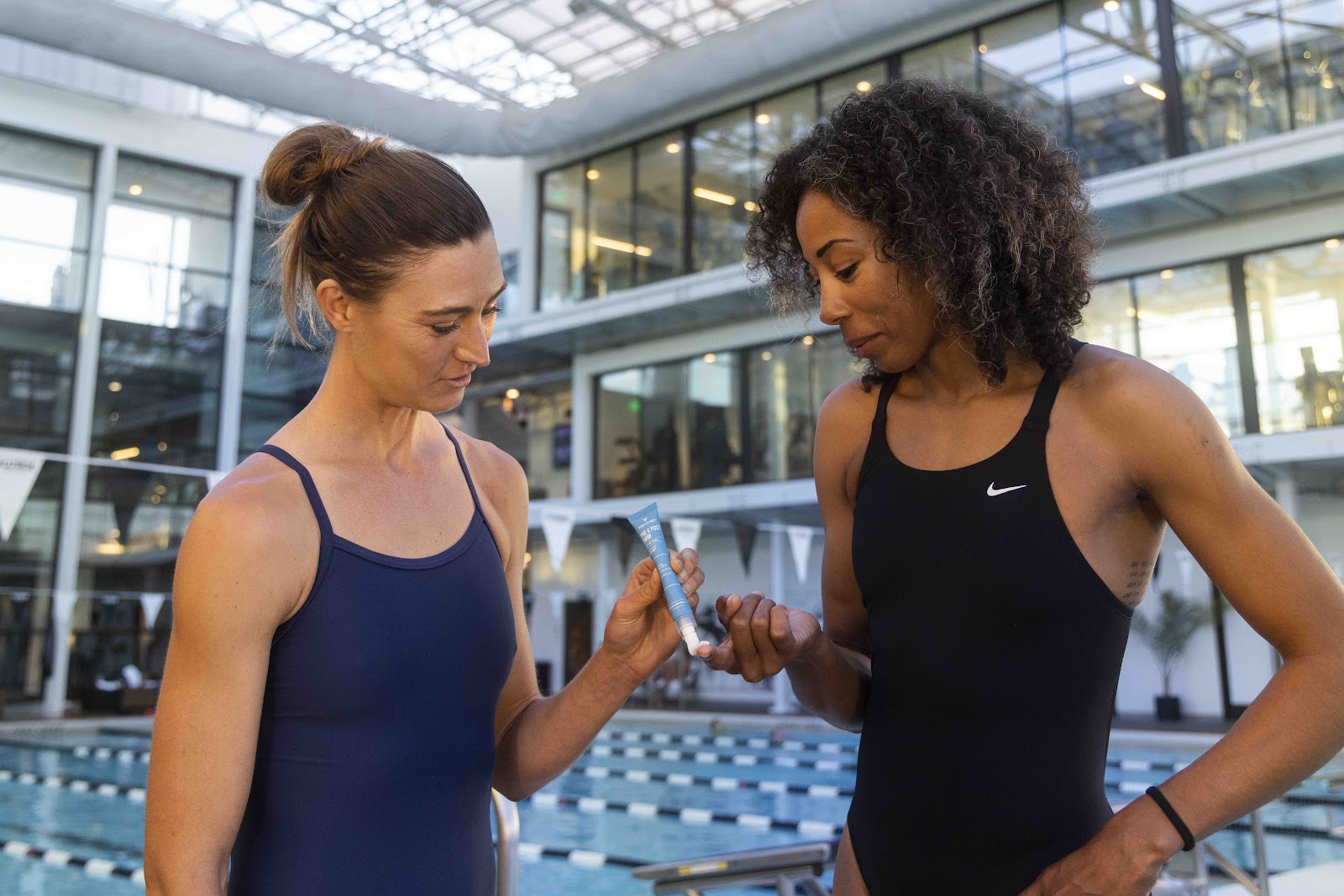
Applying Goggle Marks Soothing Gel around the orbital area before and after your swim helps hydrate the delicate skin around your eyes and soothe the visible goggle-mark pressure. Post-swim, reapply to help calm tightness and refresh the area after prolonged water exposure. If eye redness or irritation persists, spreads, or worsens, see a doctor or dermatologist.
Technique Drills That Build Bilateral Confidence
The 3-Stroke Breathing Ladder
Begin in a pool or calm lake by breathing every three strokes for 200m, then every five, then back to three. This ladder trains your lungs and neck rotation symmetrically without the stress of open-water conditions. Once the pattern feels automatic, introduce it during easy open-water sets where goggle leaks won't cost you a race result.
Not sure if, or what you actually need?
Tell us how chlorine shows up in your life and we'll point you to the right fit.


Not sure you're actually affected?
Sighting and Breathing Combined Drills
Practice
Frequently Asked Questions
Why does open water swimming cause more eye irritation than pool swimming?
Pool water is chemically controlled, whereas open water contains bacteria, biofilm, organic matter, salt, and UV reflection. These elements irritate the eyes every time you rotate to breathe.
How does eye irritation affect my bilateral breathing technique?
If one eye is more irritated than the other, you may instinctively favor the comfortable side. This leads to a lopsided stroke and poor navigation, causing you to abandon bilateral breathing entirely.
How can I improve my goggle seal to prevent irritation?
Choose low-profile, open-water-specific goggles with a wide silicone gasket. Before swimming, test the suction without the strap to ensure the seal is symmetric and adjust the nose bridge if necessary.
What is the 3-stroke breathing ladder drill?
This drill involves breathing every three strokes for 200m, then every five, and then back to three. It trains your lungs and neck to rotate symmetrically to build bilateral breathing confidence.


