










What Are the Benefits of Swimming and What Comes With It?
What Are the Benefits of Swimming and What Comes With It?

1
FULL BODY WORKOUT
Swimming engages nearly every major muscle group, helping you build strength, endurance, and flexibility all at once.

2
EASY ON JOINTS
Because water supports your body weight, swimming reduces impact on joints, making it ideal for all ages and fitness levels.

3
LOWERS BLOOD PRESSURE
Regular swimming can improve circulation and cardiovascular health, helping lower blood pressure over time.
3
ULTIMATE INSOLE
Dual-density foam provides superior arch support.

4
ENHANCES MENTAL HEALTH
Swimming boosts mood by releasing endorphins and promoting mental clarity and emotional balance.

5
IMPROVES SLEEP QUALITY
Consistent swimming helps regulate energy levels and relax the body, leading to deeper, more restful sleep.lance.

6
REDUCES STRESS & ANXIETY
The rhythmic movement and calming nature of water help ease tension, making it a natural stress reliever.
3
ULTIMATE INSOLE
Dual-density foam provides superior arch support.
1
FULL BODY WORKOUT
Swimming engages nearly every major muscle group, helping you build strength, endurance, and flexibility all at once.
2
EASY ON JOINTS
Because water supports your body weight, swimming reduces impact on joints, making it ideal for all ages and fitness levels.
3
LOWERS BLOOD PRESSURE
Regular swimming can improve circulation and cardiovascular health, helping lower blood pressure over time.
4
ENHANCES MENTAL HEALTH
Swimming boosts mood by releasing endorphins and promoting mental clarity and emotional balance.
5
IMPROVES SLEEP QUALITY
Consistent swimming helps regulate energy levels and relax the body, leading to deeper, more restful sleep.lance.
6
REDUCES STRESS & ANXIETY
The rhythmic movement and calming nature of water help ease tension, making it a natural stress reliever.
Fun Facts About Swimming


Swimming offers countless benefits,
but it can also take a toll on your skin and hair
Each swim damages your skin and hair a little more, leading to long-term issues that become harder to repair.
Swimming offers countless benefits, but it can also take a toll on your skin and hair
Each swim damages your skin and hair a little more, leading to long-term issues that become harder to repair.
So what does chlorine really do to your skin and hair?

Chlorine strips the hair’s natural oils and protective layer, leaving it dry, and prone to tangling or breakage


So what does chlorine really do to your skin and hair?
So what’s the best way to fix swimmers’ skin & hair?
The answer is use chlorine-removal products, it is that simple.
Start with a pre & post-swim routine
And shower immediately after your swim to keep chlorine from penetrating deeper.
Start with a
pre & post-swim routine
And shower immediately after your swim to keep chlorine from penetrating deeper.
Conclusion
Swimmers’ hair and skin may feel like an unavoidable part of your routine, but they’re actually signs that your natural moisture and oils are being stripped away. Chlorine breaks down and damages both skin and hair, which is why swimmers need care that goes beyond regular products. Simple habits, like staying hydrated and using specialized swimmer-focused skin and hair care can make all the difference.
Learn More
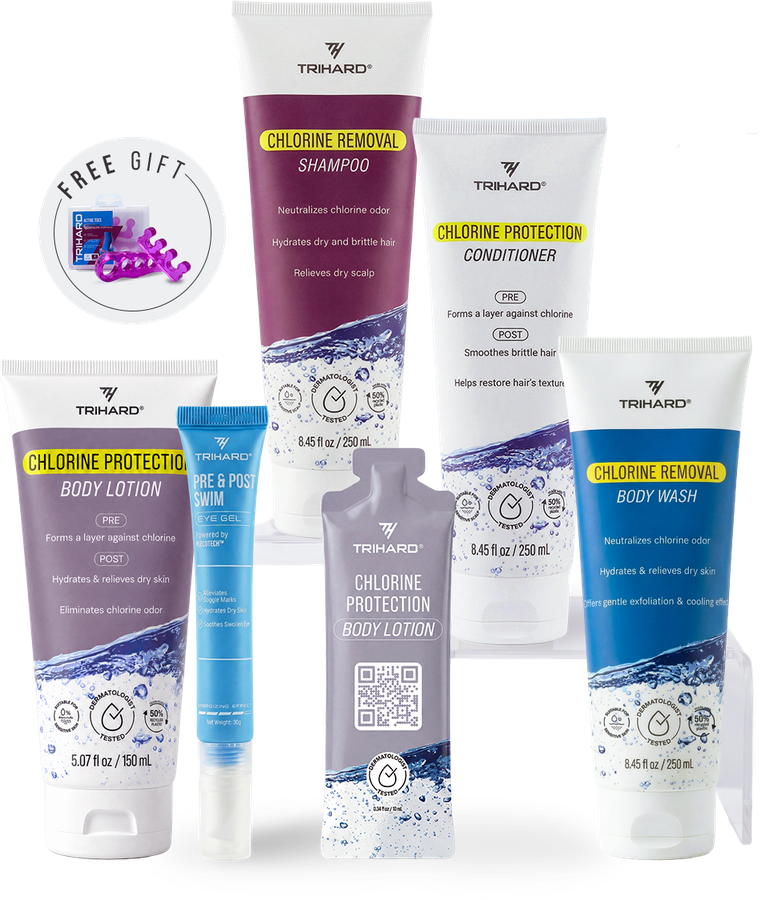
Start with a pre and post-swim routine and shower immediately after your swim to keep chlorine from penetrating deeper. Choose products that are dermatologically tested, vegan, and designed for the unique needs of swimmers, with no harmful ingredients, such as TRIHARD swimmers hair care products.
Protect your skin and hair now to prevent long-term damage and keep them healthy, hydrated, and chlorine-free, all while continuing to enjoy the many benefits of swimming.
Conclusion
Swimmers’ hair and skin may feel like an unavoidable part of your routine, but they’re actually signs that your natural moisture and oils are being stripped away.
Learn More
Chlorine breaks down and damages both skin and hair, which is why swimmers need care that goes beyond regular products. Simple habits, like staying hydrated and using specialized swimmer-focused skin and hair care can make all the difference.
Start with a pre and post-swim routine and shower immediately after your swim to keep chlorine from penetrating deeper. Choose products that are dermatologically tested, vegan, and designed for the unique needs of swimmers, with no harmful ingredients, such as TRIHARD swimmers skin & hair care products.
Protect your skin and hair now to prevent long-term damage and keep them healthy, hydrated, and chlorine-free, all while continuing to enjoy the many benefits of swimming.
FAQ About Chlorine Damage to Skin & Hair
How long does it take for chlorine to damage swimmers’ hair?
Chlorine can strip 20-30% of your hair’s moisture in just one swim, causing immediate dryness and brittleness.
How do I get rid of the chlorine smell on my skin?
The chlorine smell you notice after swimming is residue that has bonded to your skin. Regular soaps won’t remove it completely, so you need to use a swim body wash that’s specifically formulated to neutralize and remove chlorine.
Are regular shampoos enough to remove chlorine from swimmers’ hair?
Regular shampoos aren’t enough. Specially formulated chlorine-removal products, like a swim shampoo from TRIHARD, effectively neutralize chlorine and restore moisture.
Which is the best way to protect skin from chlorine?
To protect your skin from chlorine, use a chlorine protector like a swim body lotion as part of your pre-swim skin care routine. It creates an extra protective layer on the skin, minimizing chlorine absorption and preventing further damage. After swimming, use a swim body wash and swim lotion to keep your skin clean, hydrated, and itch-free.
Which is the best way to improve swim hair protection?
Use a chlorine protector like a swim hair mask before swimming to create a barrier that minimizes chlorine absorption and damage. After your swim, cleanse with a swim shampoo and conditioner to keep your hair healthy, hydrated, and chlorine-free.
Why does my skin feel dry and itchy after swimming?
When chlorine removes your skin’s protective oils, it leaves it vulnerable to dehydration and irritation. That’s why swimmer’s itch and dry skin from swimming are so common, especially after frequent pool sessions.