









How to Improve Breathing Efficiency in Long Open Water Sessions Without Pool Chemical Irritation
Improving breathing efficiency during long open water sessions comes down to three pillars: refined bilateral breathing technique, diaphragm conditioning, and eliminating the respiratory irritation that pool chemicals can cause. Open water swimmers have a unique advantage — no chlorine — but skin and airway exposure to saltwater, algae, and sunscreen residue still demands a smart post-swim care routine to keep your body performing at its best.
Building a Strong Breathing Foundation for Open Water
Master Bilateral and Sighting-Integrated Breathing
Bilateral breathing — alternating sides every three or five strokes — balances your stroke mechanics and reduces neck strain during long efforts. In open water, integrate sighting breaths every six to eight strokes to maintain course without disrupting your rhythm. Practicing this in training sessions builds the muscle memory you need on race day.

Strengthen Your Diaphragm Off the Water
Diaphragmatic breathing exercises — practised lying flat or in a seated position — dramatically increase your lung capacity and control under fatigue. Spend five minutes daily on slow, belly-driven inhales and extended exhales. Over four to six weeks, most open water swimmers notice measurably fewer urgent breath cycles per length.
Why Pool Chemical Irritation Undermines Your Breathing
How Chlorine Affects Your Airways and Skin
Repeated chlorine exposure irritates the mucous membranes lining your nasal passages and upper airways, triggering congestion that forces mouth breathing — the enemy of efficient stroke mechanics. Skin and scalp irritation from chlorine also creates a low-grade stress response that compounds fatigue over long sessions. Removing chlorine thoroughly after every pool training session is non-negotiable for open water athletes who split time between both environments.

The Right Post-Swim Cleansing Routine
Start with Chlorine Removal Shampoo to strip chlorine and mineral buildup from your scalp and hair, then follow with Chlorine Protection Conditioner to restore moisture and protect the hair shaft. For skin, the Chlorine-Removal Care Kit delivers a complete cleanse-and-hydrate system purpose-built for competitive swimmers. Consistent post-swim cleansing reduces cumulative chemical load on your body, supporting clearer airways and healthier skin over the long season.
Open Water–Specific Skin and Face Care That Supports Performance
Protect Your Face Before You Enter the Water
Saltwater and sun are relentless on open water swimmers. Applying a protective barrier to exposed skin before your session reduces chafing around your jaw and neck — areas that tighten and restrict head rotation during breathing. The Chlorine-Free Skin Set is designed specifically for open water athletes who want protection without heavy pool-chemical formulas.

Soothe Eye and Goggle-Mark Irritation Post-Swim
Goggle pressure and saltwater exposure leave the periorbital area inflamed and puffy, which can subtly affect your sighting comfort and breathing rhythm in subsequent sessions. Apply Goggle Marks Soothing Gel immediately after removing your goggles to help soothe and refresh the skin around your eyes. If eye irritation persists, spreads, or worsens, see a doctor or dermatologist.
A Complete Open Water Swimmer's Post-Session Checklist
Your Essential After-Swim Recovery Routine
A structured post-session routine consolidates gains from every training block. Use this checklist to make sure nothing is missed:

- Rinse hair and scalp with Chlorine Removal Shampoo within 10 minutes of exiting the water.
- Condition thoroughly with Chlorine Protection Conditioner to lock in moisture and detangle.
- Cleanse and hydrate skin using the Chlorine-Removal Care Kit body wash and lotion steps.
- Apply eye gel — Goggle Marks Soothing Gel — to refresh the delicate skin around your eyes.
- Hydrate and eat within 30 minutes to support skin barrier recovery from the inside out.
- Log nasal and airway comfort to track whether irritation patterns correlate with specific sessions or environments.
Upgrade to a Full Swim Care System
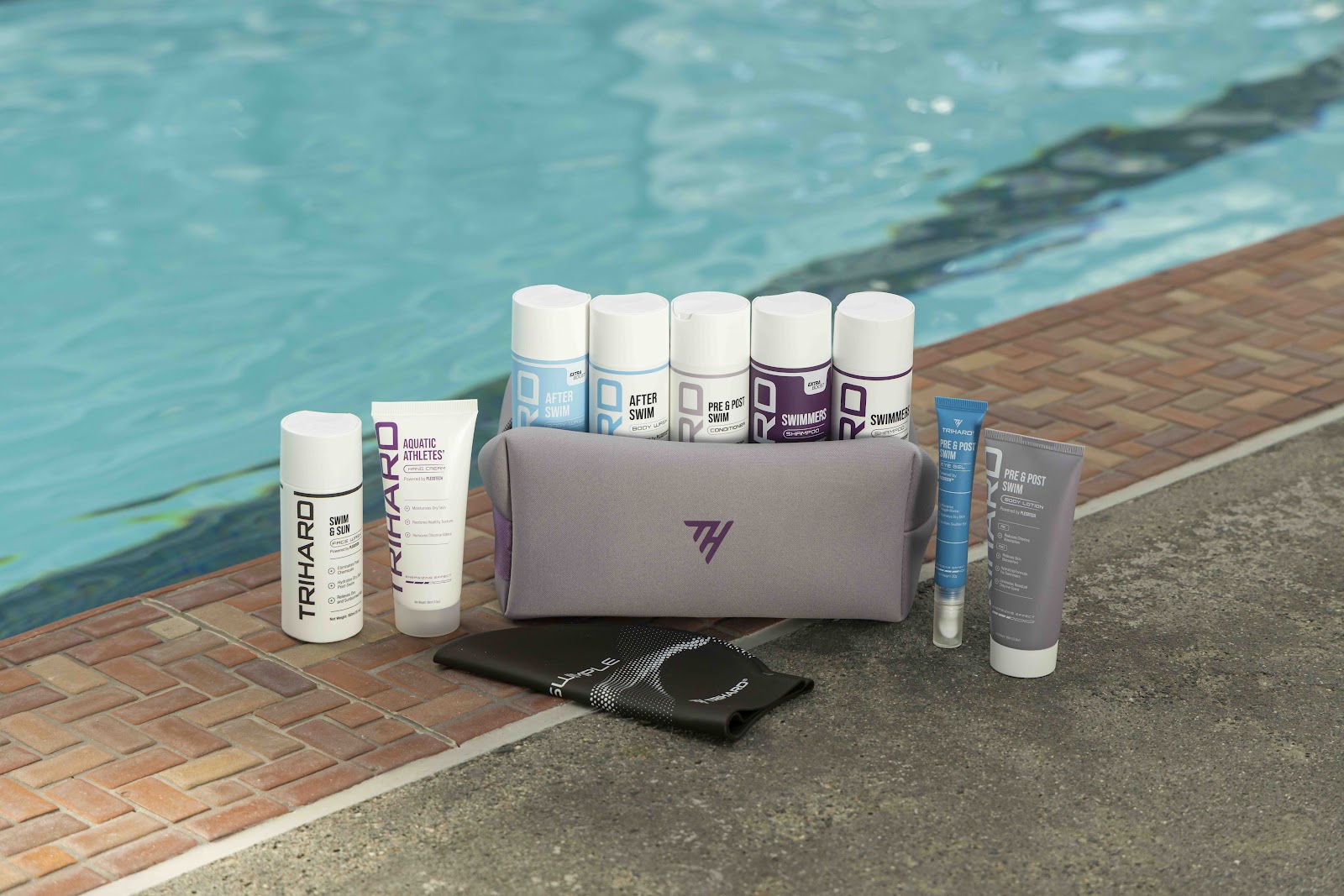
If you want everything in one place, The Ultimate Swim Care Kit bundles TRIHARD's core products into a single solution for serious open water athletes. It covers hair, skin, and eye care — the full spectrum of post-swim recovery. Pairing a dedicated kit with your breathing drills means you are addressing performance from both the technical and physiological angles simultaneously.
Frequently Asked Questions
Can saltwater irritate my airways the same way chlorine does?
Saltwater irritation is generally milder than chlorine, but repeated exposure can dry nasal membranes and cause mild congestion. Rinsing your nasal passages with clean water after open water swims helps clear residue.

Should I use different swim care products for open water versus pool training?
For pool sessions, prioritise chlorine-removal formulas like TRIHARD's Chlorine-Removal Care Kit. For open water, the Chlorine-Free Skin Set is purpose-matched to saltwater and UV exposure.
How quickly will improved breathing technique reduce fatigue in long swims?
Most swimmers notice measurable reductions in perceived effort within three to four weeks of consistent bilateral breathing drills combined with diaphragm conditioning exercises off the water.


Leave a comment