









How to Soothe and Protect Your Eyes from Chlorine Irritation After Swimming
After a swim, red, stinging eyes are one of the most common complaints among swimmers. The fastest way to soothe chlorine-irritated eyes is to rinse them with clean, lukewarm water immediately after exiting the pool, then apply a cooling eye gel formulated for swimmers. Consistent post-swim eye care, quality goggles, and a targeted skincare routine make a dramatic difference in both comfort and long-term eye health.
Why Chlorine Irritates Your Eyes
The Science Behind the Sting
Pool water contains chlorine that reacts with organic matter to form chloramines — the real culprit behind that burning sensation. Chloramines strip away the eye's natural tear film, leaving the surface dry, red, and hypersensitive. Even short swim sessions expose your eyes to enough chemical load to trigger noticeable discomfort.

The Role of pH Imbalance
When pool water is poorly balanced, its pH drifts away from the neutral range close to your natural tear film. An imbalanced pool intensifies chloramine formation and magnifies irritation. Choosing well-maintained facilities helps, but even perfect pools cause some level of eye stress — which is why post-swim care is non-negotiable for regular swimmers.
Immediate Steps to Relieve Eye Irritation Poolside
Rinse First, Every Time
The moment you step out of the pool, splash your closed eyes gently with clean, cool water from a shower or eyewash station. This dilutes and flushes residual chloramines from the delicate skin around your eyes and lashes. Keeping a small bottle of sterile saline in your swim bag is a smart backup when shower access is limited.

Apply a Targeted Soothing Eye Gel
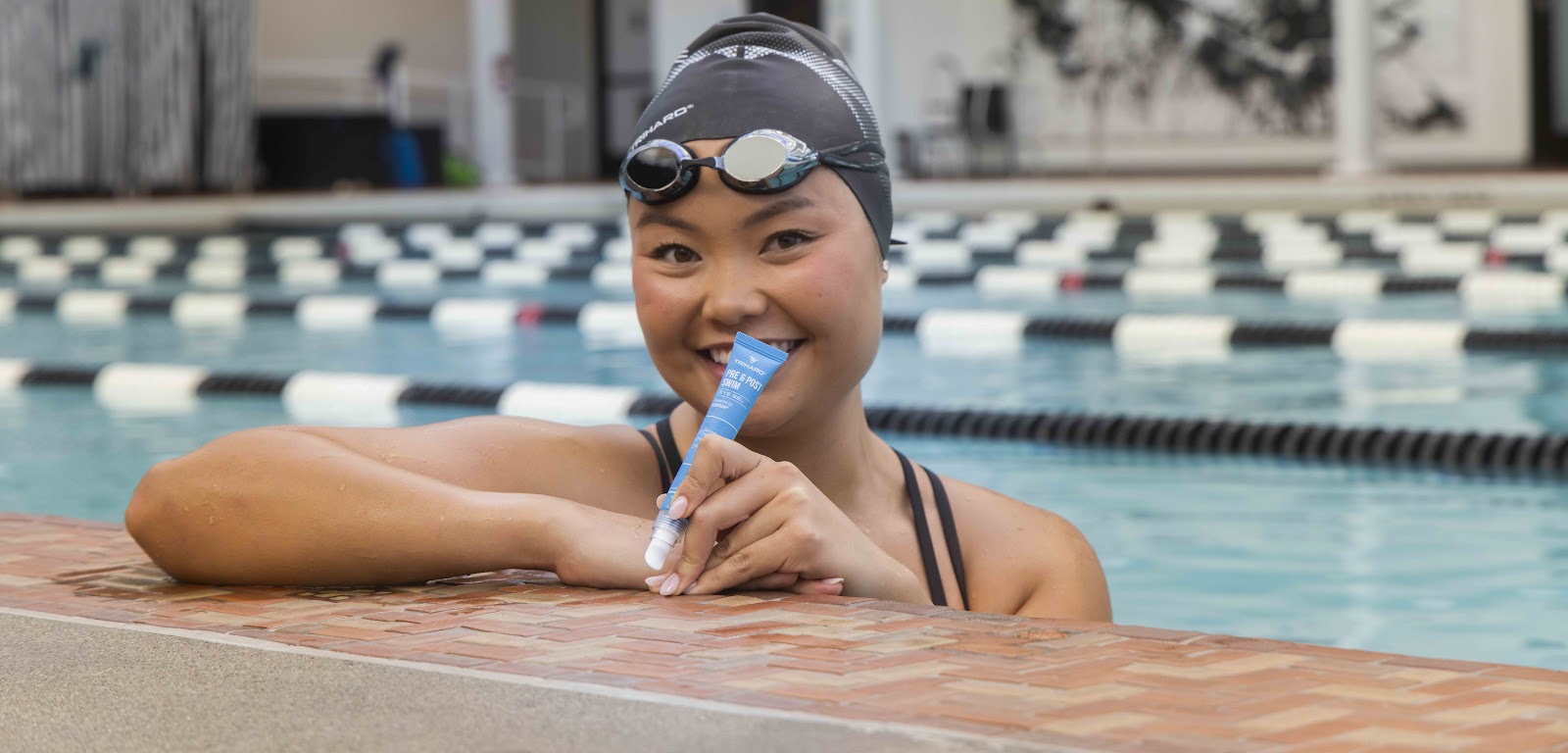
After rinsing, apply TRIHARD's Goggle Marks Soothing Gel around the eye contour area. This swimmer-specific gel is designed to hydrate, soothe, and help remove chlorine residue from the sensitive skin around your eyes, while also tackling those telltale goggle-pressure marks. It is a cosmetic essential for anyone training more than twice a week.
Protective Habits That Prevent Irritation Before It Starts
Choose and Fit Your Goggles Correctly
Leaking goggles are the number-one reason pool water reaches your eyes. Before every session, press your goggles firmly against your eye sockets without the strap to test the seal — they should hold for several seconds by suction alone. Replace worn silicone seals promptly, and size down if you experience persistent leaking despite a tight strap adjustment.

Pre-Swim Eye Protection Checklist
Building a quick pre-swim routine reduces your total chlorine exposure at the source. Work through this checklist before every pool session:
- Inspect goggle seals for cracks or deformation
- Adjust the strap so goggles sit snug but not painful
- Apply Goggle Marks Soothing Gel around the eye contour before entering the pool
- Avoid touching your eyes with wet, chlorine-covered hands mid-session
- Blink frequently underwater to keep the tear film active
- Shower your face within two minutes of leaving the pool
Building a Complete Post-Swim Skin and Eye Recovery Routine
Cleanse Chlorine from Skin and Hair Thoroughly
Eye irritation rarely exists in isolation — chlorine affects your entire body. A thorough post-swim cleanse removes chemical residue that can migrate or cause cumulative skin stress. TRIHARD's Chlorine-Removal Care Kit pairs a dedicated swimmers shampoo with a complementary body wash to strip chlorine cleanly from hair and skin without over-drying. Pair it with the Chlorine Protection Conditioner to restore moisture lost during your session.

Hydrate and Protect Skin Around the Eyes
The periorbital skin — the thin area directly around your eyes — is among the most delicate on your body and loses moisture quickly after chlorine exposure. After applying the Goggle Marks Soothing Gel, follow up with the Chlorine Protection Body Lotion on exposed face and body skin to lock in hydration. This two-step approach — targeted eye gel plus broader moisturisation — addresses both the localised sting and the wider dryness that chlorine causes.
For swimmers who want everything in one purchase, The Ultimate Swim Care Kit bundles TRIHARD's core chlorine-removal and protective products, making it easy to build a complete post-swim ritual without guesswork. Parents training children should explore the Skin & Hair Set for Kids, which is formulated with the same chlorine-removal focus but optimised for younger, more sensitive skin and eyes.

If irritation beyond the skin persists — such as prolonged redness inside the eye itself, blurred vision, or significant discharge — ask a pharmacist or doctor about suitable over-the-counter options. If symptoms persist, spread, or worsen, see a doctor or dermatologist.
Frequently Asked Questions
How long does chlorine eye irritation usually last?
Mild chlorine irritation typically clears within one to four hours after thorough rinsing and proper post-swim care. Persistent redness beyond that warrants medical advice.
Can I apply the Goggle Marks Soothing Gel directly inside my eye?
No — the Goggle Marks Soothing Gel is a cosmetic product formulated for the skin around the eye, not for direct ocular application.
Does wearing goggles completely prevent chlorine eye irritation?
Well-fitted goggles dramatically reduce exposure, but no goggle eliminates it entirely. A consistent post-swim rinse-and-soothe routine remains essential even with perfect goggle use.
Complete your swim-care routine
The products swimmers reach for to undo chlorine damage, head to toe.


Leave a comment