









Does Chlorine Cause Hair Breakage in Swimmers?
Yes, chlorine can cause hair breakage in swimmers. Repeated pool exposure strips the hair's natural oils, weakens the protein bonds inside each strand, and leaves hair dry, brittle, and prone to snapping. The damage is cumulative — the more you swim without protection, the worse it gets. The good news is that the right pre- and post-swim routine dramatically reduces chlorine's impact on your hair.
How Chlorine Actually Damages Hair
Chlorine Strips the Hair's Protective Layer
Every hair strand is coated in a cuticle — a layer of overlapping scales that lock in moisture and protect the inner cortex. Chlorine is an oxidising agent that lifts and erodes those scales with each swim. Once the cuticle is compromised, moisture escapes freely and the hair feels rough, dull, and parched.

Protein Bonds Break Down Over Time
Hair is made primarily of keratin, a fibrous protein held together by disulfide bonds. Chlorine oxidises these bonds, weakening the structural integrity of each strand. Over weeks of daily training, this oxidative stress accumulates, making hair significantly more prone to mid-shaft breakage, split ends, and thinning at the tips.
Risk Factors That Make Breakage Worse
Training Volume and Water Chemistry
Competitive swimmers training twice a day face far greater exposure than recreational lap swimmers. Pool chemistry also matters — high chlorine concentrations, low pH, and combined chloramines (formed when chlorine reacts with sweat) are all more aggressive on hair than a well-balanced pool. Open-water swimmers are not immune either; saltwater and algae treatments carry their own drying effects.
Pre-Existing Hair Condition and Chemical Treatments
Colour-treated, bleached, or chemically relaxed hair has already had its cuticle compromised, making it far more vulnerable to chlorine damage. Fine or low-porosity hair can also absorb chlorinated water more readily than coarse hair. If your hair is already processed, swimming without protection can accelerate breakage dramatically in as little as a few weeks.

A Swimmer's Hair-Protection Routine That Works
Pre-Swim: Saturate and Shield Before You Jump In
Wet hair with fresh water before entering the pool. Saturated hair absorbs far less chlorinated water because the shafts are already full. Applying a conditioning barrier — like the Travel Kit - Pre & Post Swim Conditioner — creates an additional protective film over the cuticle, reducing chlorine uptake during your session. This single step makes a measurable difference.
Post-Swim: Remove Chlorine Immediately and Rehydrate
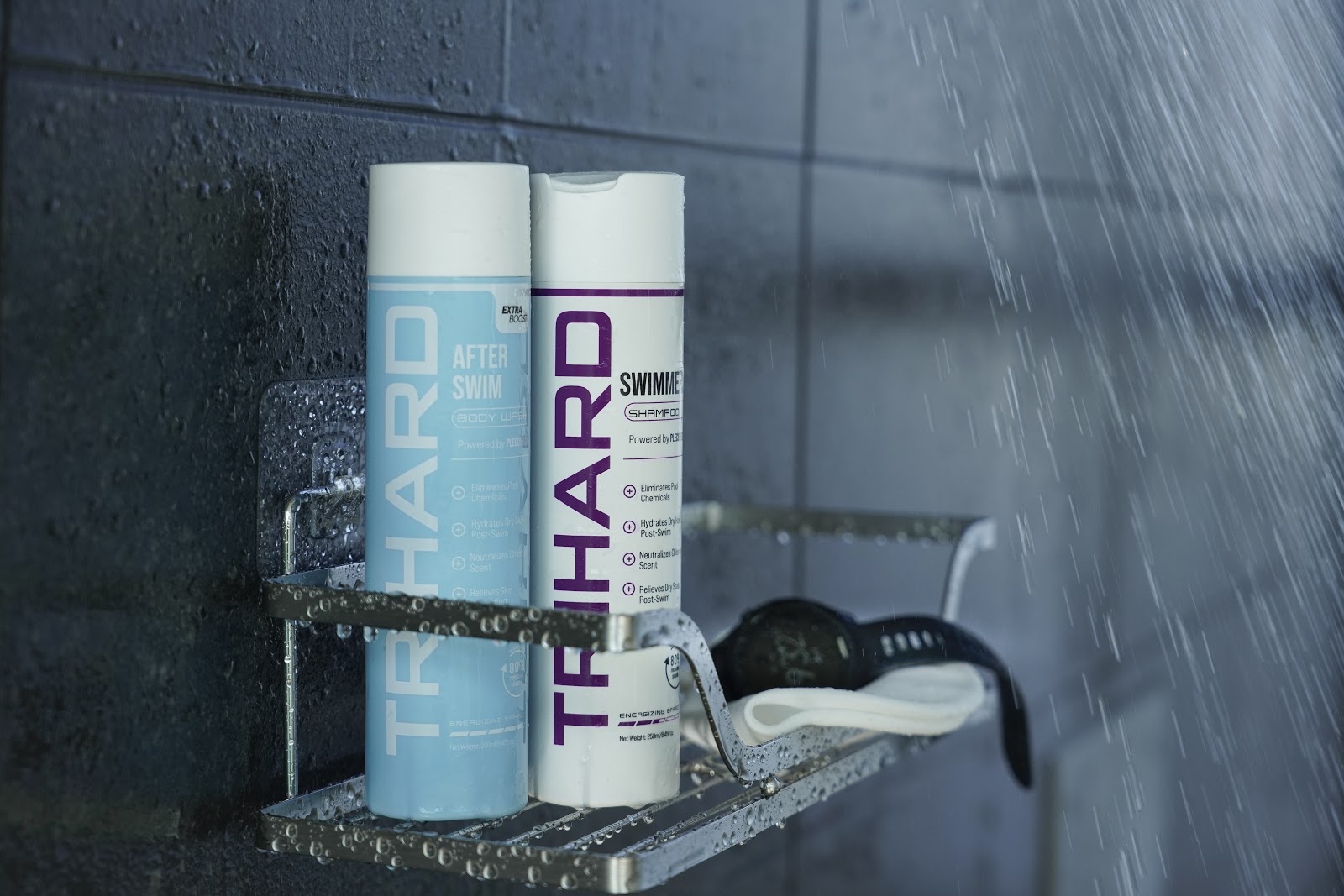
The longer chlorine sits on hair after you exit the pool, the more oxidative damage it causes. Use a dedicated swimmers shampoo designed to chelate and remove chlorine, not just rinse it. The Swimmers Shampoo Extra Boost 34oz is formulated specifically to draw chlorine and mineral build-up off the hair shaft, then follow immediately with the Pre & Post Swim Conditioner to restore moisture and smooth the cuticle.

Quick-Reference: Swimmer's Hair-Care Checklist
- Rinse hair with fresh water before entering the pool
- Apply a conditioning barrier to create a protective layer pre-swim
- Use a cap whenever possible to minimise direct chlorine contact
- Shampoo with a chlorine-removal formula within 30 minutes of exiting the pool
- Condition every post-swim wash — never skip this step
- Deep-condition or mask once a week if training daily
TRIHARD Products Built for Swim-Hair Recovery
The Hair Comb-O: A Complete Post-Swim Hair System
For swimmers who want a streamlined kit, The Hair Comb-O bundles the shampoo and conditioner swimmers actually need into one solution. It's designed to cleanse away chlorine, replenish lost moisture, and leave hair manageable after training — without the guesswork of mixing and matching products not built for pool use.
Travel and Trial Options for Every Swimmer
If you train across multiple pools or travel for competitions, keeping full-size bottles poolside isn't always practical. The Travel Kit - Swimmers Shampoo Extra Boost and the Variety Travel Kit - 32 Sachets give you chlorine-removal hair care in portable formats you can stash in any swim bag. Consistent post-swim care — even on the road — is what prevents cumulative breakage from building up over a season.

Caring for Kids' Hair in the Pool
Children's hair is finer and more porous than adult hair, making it especially susceptible to chlorine damage during swim lessons or team practice. The Skin & Hair Set for Kids is formulated for younger swimmers, gently cleansing chlorine from both hair and skin after pool sessions to keep kids' hair healthy and hydrated all season long.
Frequently Asked Questions
Can chlorine cause permanent hair loss in swimmers?
Chlorine typically causes breakage along the hair shaft rather than true hair loss at the root. Persistent thinning or scalp-level shedding should be assessed by a doctor or dermatologist to rule out other causes.
How quickly does chlorine damage hair?
Damage is cumulative, but swimmers training daily without protection can notice dryness and increased breakage within two to four weeks. If symptoms persist or worsen, see a dermatologist.
Does a swim cap fully protect hair from chlorine?
Swim caps significantly reduce chlorine exposure but do not create a watertight seal. Combining a cap with a pre-swim conditioning barrier and a post-swim chlorine-removal shampoo offers the strongest protection.


Dejar un comentario