









How to Handle Breathing Anxiety in Open Water (Plus Pre-Swim Skin Barrier Tips)
Breathing anxiety in open water is one of the most common challenges swimmers face, and it's almost always rooted in a combination of sensory overload and lack of preparation. The good news: structured breathwork, graduated exposure, and a calming pre-swim routine — including applying a protective skin barrier — can dramatically reduce panic and help you stay focused from the first stroke.
Understanding Why Breathing Anxiety Happens in Open Water
The sensory overload factor
Unlike a pool, open water removes every visual anchor. Cold temperatures, murky depths, and unpredictable waves trigger your body's threat response before you've even taken a stroke. Your breathing rate spikes and CO2 tolerance drops, creating a feedback loop of panic that feels impossible to break in the moment.

The role of skin comfort in mental focus
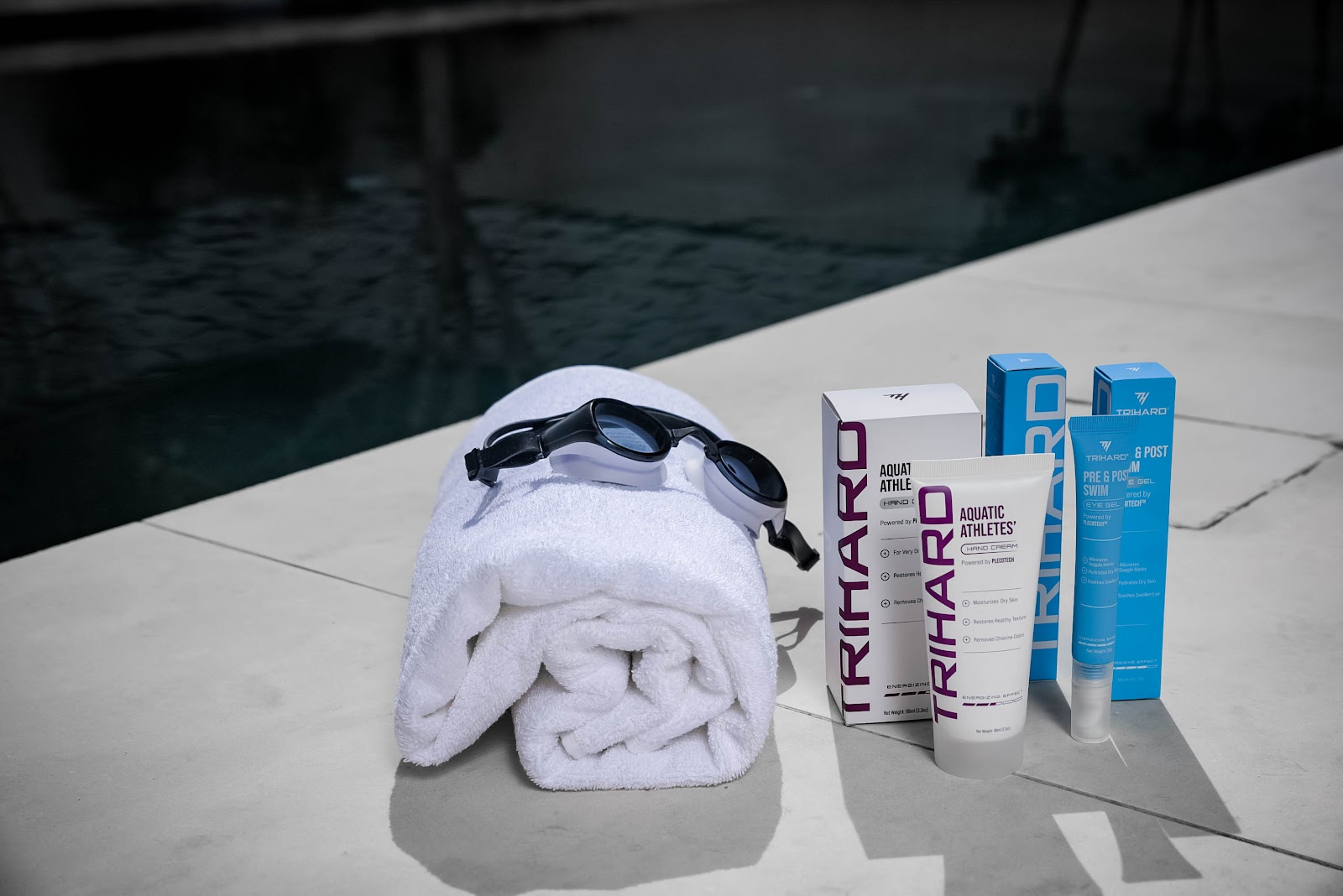
Itchy, stinging, or irritated skin is a constant distraction that amplifies anxiety. Salt, algae, and temperature changes all assault the skin barrier. When your skin feels protected and comfortable before you enter the water, one major source of sensory distraction is eliminated, freeing mental bandwidth for breath control. Starting with Chlorine-Free Skin Set helps hydrate and protect skin before an open water session.
Breathwork and Mental Techniques That Actually Work
Box breathing before entry
Box breathing — inhale for four counts, hold for four, exhale for four, hold for four — activates the parasympathetic nervous system within two to three minutes. Practice this on the shore before you wade in. Pairing it with a deliberate physical ritual, like applying your pre-swim products, anchors the routine into a reliable calm-down cue.

Bilateral breathing and exhale extension
In open water, many anxious swimmers hold their breath without realising it. Train yourself to exhale fully and slowly underwater — extend your exhale to roughly twice the length of your inhale. Bilateral breathing every three strokes also prevents the one-sided CO2 build-up that triggers the urge to gasp. Practice this in a pool before race day.
Building a Pre-Swim Ritual That Calms and Protects
Why ritual matters for anxiety reduction
Consistent pre-race rituals reduce cortisol because they signal safety to the brain. The ritual doesn't need to be long — ten focused minutes of skin prep and breathwork is enough. Swimmers who follow the same sequence every session report faster anxiety recovery at the water's edge, because the routine itself becomes the trigger for focus.

Your skin barrier checklist
A smart pre-swim skin prep routine for open water should include:
- Rinse skin with fresh water to remove surface debris before applying any barrier product
- Apply a hydrating skin product like Chlorine-Free Skin Set to exposed areas
- Use Goggle Marks Soothing Gel around the eye contour to reduce goggle-seal irritation
- Secure hair and scalp with conditioner from The Ultimate Swim Care Kit to prevent salt tangling
- Run through two rounds of box breathing while applying products
- Enter the water gradually — waist first — to acclimatise temperature before submerging your face
Post-Swim Recovery to Protect Skin and Reset Mentally
Removing salt and environmental residue
Open water leaves salt, algae, and environmental pollutants on your skin and hair. Rinsing immediately after exit and washing with a dedicated swim-care formula is essential. Chlorine Removal Shampoo cleanses the scalp and hair thoroughly after both pool and open water sessions, helping remove residue that can cause post-swim irritation and itching.

Restoring skin hydration after salt exposure
Salt water strips the skin's natural moisture more aggressively than chlorinated pool water. Follow your post-swim wash with Chlorine Protection Body Lotion to replenish hydration and soothe skin after exposure. Pair it with The Tri-Care for a complete skin-restoration step that helps you feel refreshed and ready to train again tomorrow. If any skin irritation persists, spreads, or worsens, see a doctor or dermatologist.
Frequently Asked Questions
Can skin irritation actually make breathing anxiety worse in open water?
Yes. Physical discomfort like stinging or itchy skin raises perceived stress levels, which feeds the anxiety cycle. Reducing skin irritation through proper barrier prep removes one key trigger.

How long does it take to overcome open water breathing anxiety?
Most swimmers see meaningful improvement within four to six dedicated open water sessions when combining breathwork practice with graduated exposure and a consistent pre-swim ritual.
Which TRIHARD products are best for open water swimmers specifically?
The Chlorine-Free Skin Set and The Ultimate Swim Care Kit are ideal starting points for open water swimmers focused on skin protection and post-swim recovery.
Complete your swim-care routine
The products swimmers reach for to undo chlorine damage, head to toe.


Laissez un commentaire