









Goggle Marks and Raccoon Eyes: How to Reduce Them After Swimming
Quick answer
To reduce goggle marks and "raccoon eyes" from swimming: stop over-tightening your goggles and make sure they actually fit, so the seal doesn't dig into the soft skin around your eyes. Then protect that thin periorbital skin before you swim and de-puff and hydrate it after. The marks are pressure indentations plus puffiness, and they look worse because chlorine dries out the delicate under-eye area so it indents and stays marked longer. They usually fade on their own within an hour or two, what you can control is how deep they go and how fast they settle. Cooling, hydrating, and not cranking the straps are the three levers that matter.
Why you get raccoon eyes in the first place
I'm a swimmer, and for years I'd walk out of the pool with two red rings pressed around my eyes that took the whole drive home to fade. Sometimes the under-eye area looked puffy and dark on top of it, the full raccoon. I figured it was just the price of training. It mostly isn't.

Here's what's actually going on. Goggles work by sealing against the skin around your eye socket, the periorbital area, and that skin is some of the thinnest and most delicate on your whole body. When you press a silicone gasket into it for an hour, then add the suction that keeps water out, you get an indentation. That's the "goggle mark." The puffiness and darkness, the "raccoon eyes", come from pressure and fluid pooling in that soft tissue, made more visible because the skin there is so thin.
Chlorine makes all of it worse. Repeated chlorine exposure strips the natural oils and moisture out of skin, and dry, depleted skin indents more easily and bounces back more slowly. So the same goggles that leave a faint line on well-hydrated skin can leave a deep, lingering ring on skin that's been sitting in a chlorinated pool. The marks aren't only about the goggles, they're about the condition of the skin the goggles are pressing into.

The good news: every part of that is something you can influence.
How to reduce goggle marks and raccoon eyes
This is the routine I follow now, built around fit, protection, and recovery.
Step 1, Fix the fit and don't over-tighten
The single most common mistake is cranking the straps until the goggles "definitely won't leak." All that does is press the seal deeper into your skin. A properly fitted pair should suction onto your eye socket and hold with light strap tension, the suction does most of the sealing, not the strap. Press the goggles gently to your face without the strap; if they stick for a second or two on their own, the fit is good and you barely need to tighten.
If you swim often, rotate between two pairs with different gasket shapes so the seal doesn't sit in the exact same spot every session. And loosen them slightly between sets when you can. Smaller, lower-profile racing goggles tend to mark more because the seal is narrower and the pressure is concentrated, fine for a race, rough for a two-hour practice.
Step 2, Protect the skin before you swim (pre)
Goggle marks go deeper into dry skin, so the move is to go in with that periorbital skin hydrated and a little more resilient. Before you put your goggles on, work a thin layer of a pre & post swim eye gel around the eye, the orbital bone, not in the eye itself. It hydrates the skin and helps cushion it against the goggle pressure and chlorine. Think of it the same way you'd think about the pre-swim step for your hair: it's easier to prevent the damage than to undo it afterward.
One important note: this is an around-the-eye product. It goes on the skin of the eye area only, it is never an eye drop and never goes in the eye.
Step 3, De-puff and soothe after you swim (post)
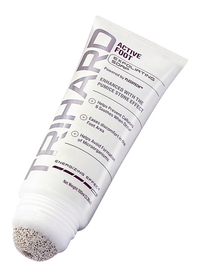
As soon as you're out, this is where you actually shrink the raccoon look. Cooling the area constricts the puffiness and helps the indentation settle faster. Our Goggle Marks Eye Gel has a built-in ceramic stone applicator, so the gel goes on cool and you can glide the stone around the orbital bone for an instant cooling, de-puffing pass, no fridge or cold spoon required. The formula carries hyaluronic acid and botanical extracts to hydrate and soothe the chlorine-dried skin and reduce puffiness.
Gently is the whole game here. The skin is thin, you're soothing and cooling, not scrubbing. A minute of cool, light pressure does more than rubbing ever will.
That's the loop: fit so it doesn't dig in, protect before, de-puff after. The eye gel is one product doing two of those jobs, pre to cushion and hydrate, post to cool and soothe.
This isn't just for competitive swimmers
I built TRIHARD as a triathlete, but raccoon eyes don't check your race times. Anyone who wears goggles gets them. If you do a few recreational laps on vacation, swim for fitness a couple of mornings a week, or wear goggles in a hot tub, you're pressing the same seal into the same thin skin, often without the conditioning a daily lap swimmer's skin builds up.
Kids in swim lessons are the clearest case. Little ones often wear goggles too tight because a leak is annoying and they'll crank the strap themselves, and their skin is even more delicate. If your kid comes out of lessons with deep rings around their eyes, loosen the straps first, check the fit, and keep the under-eye area hydrated. The fix is the same, it just matters more on smaller faces.
How is TRIHARD different?
TRIHARD is the only swim-care brand built around both pre-swim protection and post-swim recovery, a 360° system rather than a single bottle. Every formula is dermatologically tested and powered by PLECOTECH™, our patent-pending technology built on a ratio of 100% natural red algae, Dead Sea minerals, and botanical extracts designed to work with chlorine-exposed skin instead of ignoring it. Our products are made in the USA, use 50% recycled-plastic packaging, and are trusted by the largest roster of supporting athletes in the category. The Goggle Marks Eye Gel is the only swim-specific eye product I know of that's made for both before and after, protect the periorbital skin going in, cool and de-puff it coming out.
FAQ
How do I get rid of goggle marks fast after swimming? Cool the area and hydrate it. Goggle marks are pressure indentations on thin, often chlorine-dried skin, and cooling helps the puffiness and the indent settle faster. A cool, hydrating eye gel, ours has a built-in ceramic stone applicator for an instant cooling pass around the orbital bone, speeds it up. Most marks fade within an hour or two on their own; this just shortens it.
Why do my goggles leave such deep marks? Usually two reasons: the straps are too tight, and the skin is dry. Over-tightening presses the seal into the delicate skin around your eye, and chlorine-dried skin indents more and recovers slower. Loosen the straps so the suction does the sealing, and keep the under-eye area hydrated before and after you swim.
Can I put eye gel in my eye to help? No. The Goggle Marks Eye Gel is for the skin around the eye, the periorbital area, only. It's not an eye drop and never goes in the eye. You apply a thin layer on the orbital bone before swimming to cushion and hydrate, and again after to cool and de-puff.
Do goggle marks go away on their own? Yes, the indentations from a normal session typically fade within an hour or two as the skin rebounds. What you're managing is how deep they get and how long they linger, which comes down to goggle fit and how hydrated that skin is.
My kid gets raccoon eyes after swim lessons, what should I do? Check the fit first. Kids tend to over-tighten goggles to stop leaks, which presses the seal harder into very delicate skin. Loosen the straps, make sure the goggles suction on with light tension, and keep the under-eye skin hydrated. Be gentle, you're soothing thin skin, not scrubbing it.
Frequently Asked Questions
Why do I get raccoon eyes after swimming?
Raccoon eyes are caused by pressure from your goggles pressing into your delicate under-eye skin. The marks become more pronounced because chlorine strips the skin of natural oils, making it drier and less resilient.
How can I tell if my goggles fit properly?
A properly fitted pair should create enough suction to hold to your eye socket without tight straps. Test the fit by pressing the goggles to your face without the strap; if they stick for a second or two, the fit is likely good.
Should I apply products around my eyes before swimming?
Yes, applying a thin layer of a pre-swim eye gel around the orbital bone helps hydrate the skin. This creates a cushion that protects the delicate area against goggle pressure and chlorine damage.
What is the best way to reduce eye puffiness after a swim?
Cooling the under-eye area immediately after your swim helps constrict puffiness and allows indentations to settle faster. You can achieve this by gently applying a cooling eye gel or using a cold applicator around the orbital bone.


Laissez un commentaire