










What Features Should I Look for in Swim Goggles for Triathlons?
The best triathlon swim goggles combine a low-profile fit, UV-resistant lenses, and a secure but comfortable seal that won't leave painful marks after a long open-water swim. Look for wide peripheral vision, anti-fog coatings, and a streamlined frame that transitions easily from pool training to race day. After every swim, pairing great goggles with the right skin-care routine protects the delicate eye area from chlorine and sun exposure.
Fit and Seal: The Foundation of Triathlon Goggles
Why a Low-Profile Seal Matters
Triathlon goggles sit flush against the eye socket with a minimal silicone or foam gasket rather than a thick pool-goggle frame. A snug, low-profile seal reduces drag in open water and prevents leaks during the chaos of a mass swim start. Look for dual-layer silicone gaskets that conform to your orbital shape without excessive suction pressure.
Head Strap and Buckle Adjustability
A split silicone strap distributes pressure evenly and resists snapping under tension. Quick-release buckles let you micro-adjust the fit poolside or even in transition. Avoid single-strap designs for triathlon distances — they shift more easily and can cause uneven goggle marks after a 1,500-metre or longer swim.
Lens Technology: Seeing Clearly in Any Condition
Tint and UV Protection for Open Water
Open-water triathlon legs often start at sunrise or in bright midday glare. Polarised or mirrored lenses with UV400 protection cut surface glare and help you sight buoys accurately. For overcast or dawn swims, choose a lighter amber or clear lens; for bright conditions, opt for smoke, dark grey, or mirrored blue tints.
Anti-Fog Coatings and Lens Shape
A factory anti-fog coating is essential — fogged lenses mid-race cost precious seconds and confidence. Wide-angle or Swedish-style curved lenses increase your field of view, helping you navigate open-water courses without constantly lifting your head. Avoid touching the inner lens surface, which degrades the coating quickly.
Goggle Comfort Before, During, and After the Swim
Preventing and Treating Goggle Marks
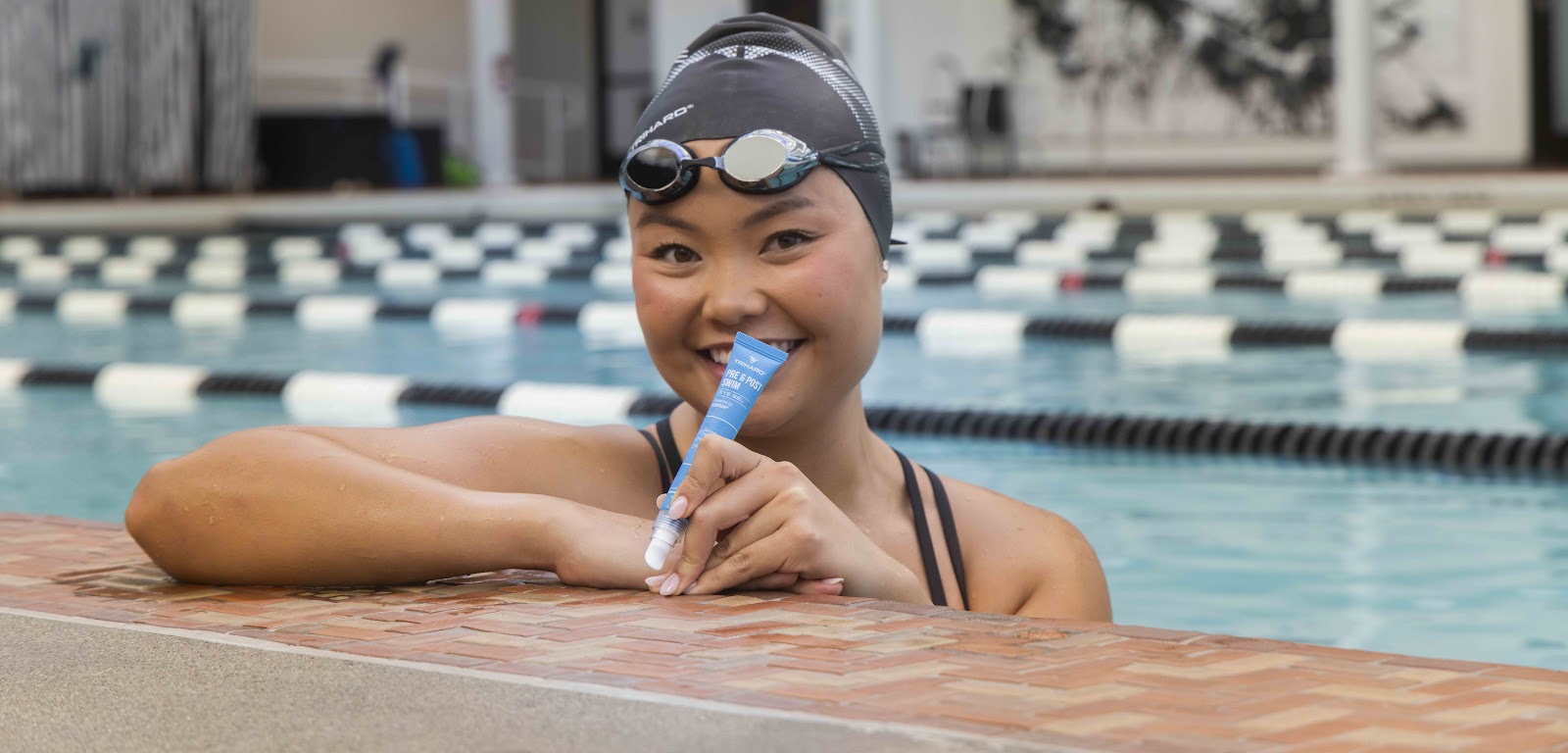
Even perfectly fitted goggles leave red, puffy rings around the eyes after extended wear. Applying Goggle Marks Soothing Gel before and after your swim helps soothe and hydrate the delicate periorbital skin, reducing the appearance of compression marks. It's a specialist swim-care step that pool and open-water triathletes consistently overlook.

Chlorine and Saltwater Skin Care Around the Eyes
The thin skin around your eyes absorbs chlorine and salt faster than other areas, leading to dryness and irritation. After removing your goggles, gently rinse your face and follow up with a soothing product like Goggle Marks Soothing Gel to rehydrate and calm the area. If redness or irritation persists, spreads, or worsens, see a doctor or dermatologist.
Post-Swim Skin and Hair Care: The Complete Triathlete Routine
Removing Chlorine from Skin and Body
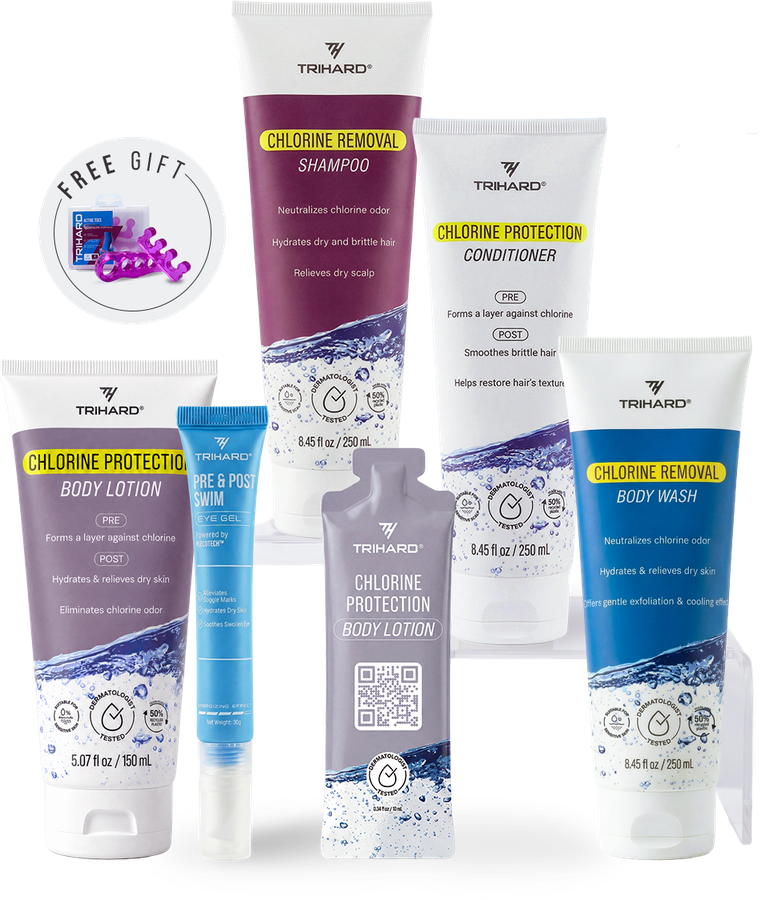
After your swim leg or training session, chlorine clings to skin and breaks down your natural moisture barrier. Using a dedicated wash like Chlorine Removal Body Wash helps remove chlorine residue and keeps skin hydrated rather than stripped. Pair it with Chlorine Protection Body Lotion to lock moisture back in before heading out on the bike.
Protecting Hair from Repeated Swim Exposure
Triathletes train in the water multiple times per week, which means cumulative chlorine damage to hair is a real concern. The The Hair Comb-O bundles Chlorine Removal Shampoo and Chlorine Protection Conditioner into one swim-specific routine that helps remove chlorine and restore moisture after every session. For a complete multi-product skin and hair solution, the Chlorine-Removal Care Kit covers everything in one box.
Quick Triathlon Goggle Checklist
- Low-profile silicone gasket — minimises drag and pressure marks
- UV400 or polarised lenses — essential for open-water glare
- Anti-fog inner coating — non-negotiable for race clarity
- Split-strap with quick-release buckles — secure and transition-friendly
- Interchangeable nose bridge — ensures a custom, leak-free fit
- Post-swim eye-area gel — like Goggle Marks Soothing Gel to soothe compression marks
Frequently Asked Questions
Are triathlon goggles different from regular swim goggles?
Yes. Triathlon goggles are typically lower-profile, offer wider peripheral vision, and include UV/polarised lenses designed for open-water and variable light conditions rather than indoor pool lanes.
How do I stop goggle marks from hurting after a long swim?
Apply Goggle Marks Soothing Gel before and after swimming to hydrate and soothe the periorbital skin and reduce visible compression marks.
Can chlorine in pool training damage the skin around my eyes?
Yes — repeated chlorine exposure dries out the delicate skin around the eyes; a specialist soothing gel and a full-body chlorine-removal wash routine help keep that irritation in check. If symptoms persist or worsen, see a doctor or dermatologist.


Lascia un commento