










Does Chlorine Cause Hair Loss in Swimmers?
Chlorine does not directly cause hair loss in swimmers, but it can seriously weaken hair over time. Repeated chlorine exposure strips the hair's natural oils, damages the cuticle, and leads to breakage — which looks like hair loss but is technically hair breakage. True hair loss from the follicle is rarely caused by chlorine alone. Still, the cumulative damage is real, and every swimmer should take it seriously.

How Chlorine Damages Swimmer Hair
What Chlorine Actually Does to Your Strands
Chlorine is an oxidizing agent. When it binds to your hair shaft, it breaks down the keratin proteins that give hair its strength and elasticity. The outer cuticle layer lifts and frays, leaving the inner cortex exposed and vulnerable to further damage with every swim session.
The Role of Copper and Hard Water
Pool water often contains trace copper from pipes and algaecides. Copper ions bind to damaged hair protein and cause the greenish tint many swimmers dread. This chemical bonding also accelerates oxidative stress on each strand, making hair brittle, porous, and prone to snapping at the roots — mimicking the appearance of thinning hair.
Breakage vs. True Hair Loss: Know the Difference
Identifying Chlorine-Related Breakage
Chlorine-related damage almost always presents as mid-shaft or end breakage rather than loss at the root. If you notice short, uneven strands around your hairline or increased shedding after pool sessions, chlorine damage is the likely culprit. True androgenetic or stress-related hair loss typically shows a receding hairline or visible scalp thinning.
When to See a Professional
If hair thinning is rapid, patchy, or accompanied by scalp irritation that doesn't improve with better swim-care habits, consult a dermatologist. Conditions like traction alopecia, telogen effluvium, or contact dermatitis can overlap with swim-related damage. If symptoms persist, spread, or worsen, see a doctor or dermatologist.
A Swimmer's Hair-Protection Routine
Pre-Swim Defense
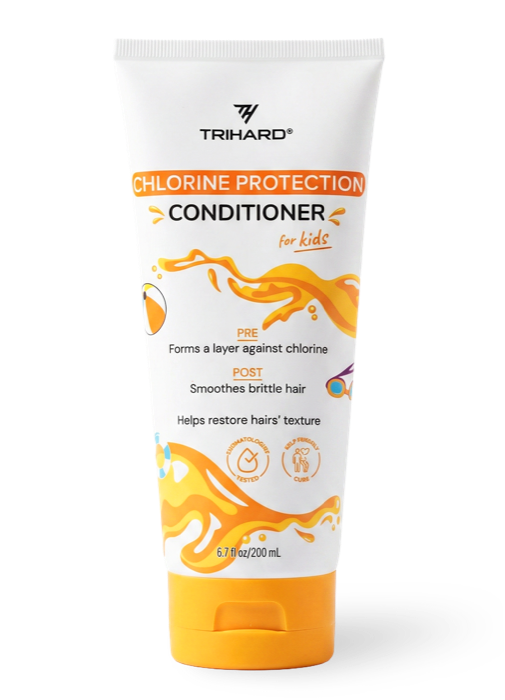
Saturating hair with fresh water before entering the pool reduces how much chlorinated water each strand absorbs — dry hair can soak up far more chemicals. Follow up by applying a leave-in conditioner or protective product like Chlorine Protection Conditioner to create a barrier that slows chlorine uptake during training.
Post-Swim Cleanse and Repair
Rinsing immediately after swimming is the single most impactful habit you can build. Use a dedicated swim shampoo rather than a standard one — TRIHARD's Chlorine Removal Shampoo is formulated to help remove chlorine and pool chemicals from the hair shaft, while its conditioning agents work to restore softness and manageability after every session.
Your Post-Swim Hair Checklist
- Rinse hair with fresh water immediately after exiting the pool.
- Apply Chlorine Removal Shampoo and lather thoroughly for 60 seconds.
- Follow with Chlorine Protection Conditioner from mid-shaft to ends.
- Rinse with cool water to help smooth the cuticle.
- Pat dry — never rub — to minimize mechanical breakage.
- Consider a weekly deep-condition treatment on heavy training weeks.
Choosing the Right Swim-Care Products for Your Hair
Complete Kits for Serious Swimmers
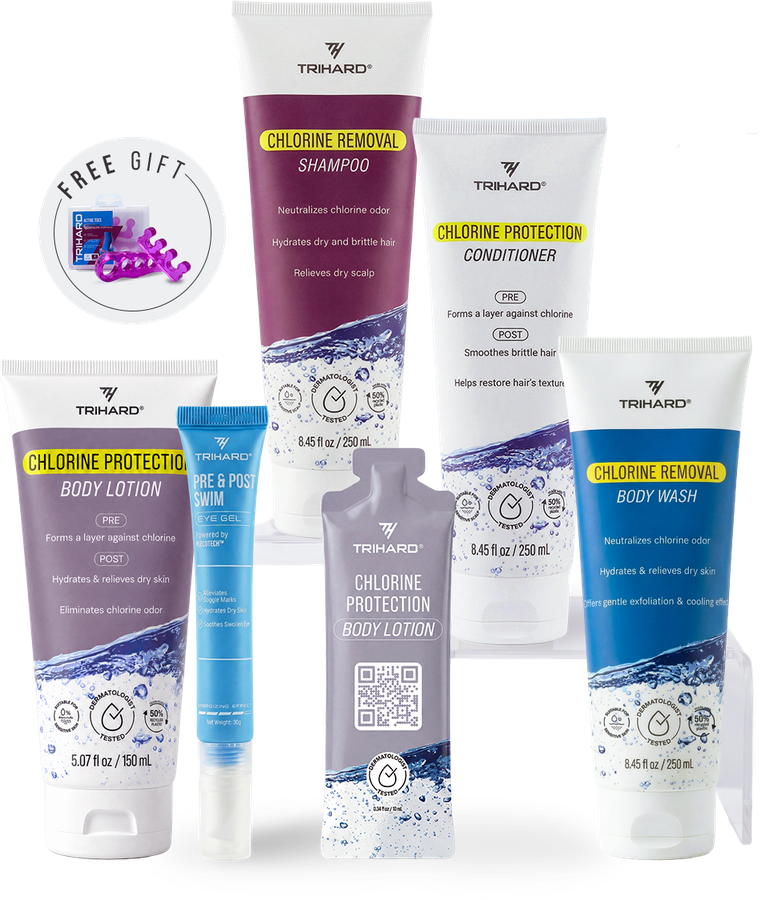
If you want a streamlined solution, TRIHARD's The Hair Comb-O pairs the Chlorine Removal Shampoo with the Chlorine Protection Conditioner in one bundle — ideal for swimmers training four or more times per week. For a full head-to-toe routine, the Chlorine-Removal Care Kit adds body wash to the equation so chlorine is addressed everywhere, not just on your hair.
Protecting Young Swimmers' Hair
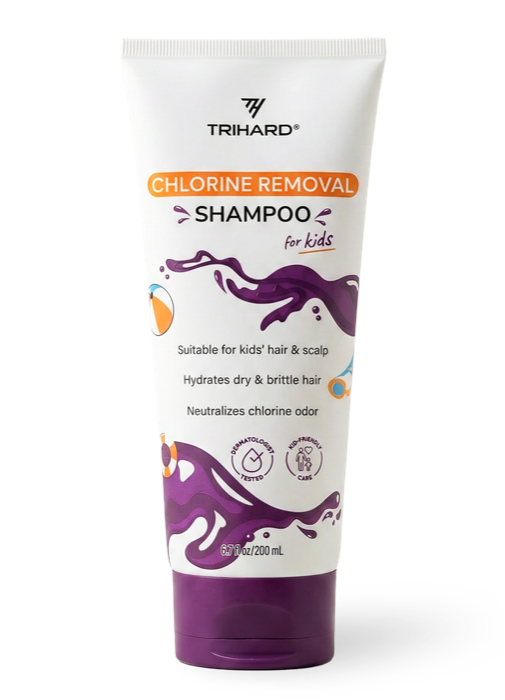
Children's hair is finer and more susceptible to chemical damage. TRIHARD's Chlorine Removal Shampoo for Kids and Chlorine Protection Conditioner for Kids are gentle formulas designed for young swimmers. The Skin & Hair Set for Kids bundles both with a body wash so parents can cover every post-swim step in one purchase.
Frequently Asked Questions
Can swimming every day cause permanent hair loss?
Daily swimming without proper chlorine removal can cause significant breakage and a thinning appearance over time, but it rarely causes permanent follicle-level hair loss on its own. Consistent post-swim care dramatically reduces cumulative damage.
Does wearing a swim cap fully protect your hair from chlorine?
Swim caps reduce exposure but don't eliminate it — water still seeps in. Combining a cap with a pre-swim conditioner and a post-swim chlorine-removal shampoo gives you the most complete protection.
How often should swimmers wash their hair with a chlorine removal shampoo?
Use a chlorine removal shampoo after every pool session. Unlike regular shampoos, swim-specific formulas like TRIHARD's Chlorine Removal Shampoo are designed for frequent use without over-stripping the scalp.


Leave a comment