









Does Putting Conditioner in Your Hair Before Swimming Help?
Yes, applying conditioner to your hair before swimming genuinely helps — but only if you use the right kind. A leave-in or protective conditioner coats each strand, reducing how much chlorinated or salt water your hair can absorb. It won't block every chemical, but it creates a meaningful barrier that leaves hair softer, less brittle, and easier to manage after you get out of the pool.
Why Hair Needs Protection Before You Swim
How Chlorine Damages Hair
Chlorine is an oxidizing agent. When it penetrates the hair shaft, it strips away natural oils, degrades the keratin protein structure, and roughens the cuticle. Over time, this leads to dryness, split ends, and that distinctive brittle texture swimmers know all too well. Repeated exposure accelerates the damage significantly.

How Salt Water Compounds the Problem
Ocean swimmers aren't off the hook. Salt water pulls moisture out of the hair through osmosis, leaving strands dehydrated and prone to breakage. UV exposure at outdoor venues adds another layer of oxidative stress. Between chlorine and salt, hair faces a constant assault without a pre-swim defense strategy.
How a Pre-Swim Conditioner Actually Works
Saturation Is the Key Principle
Dry, porous hair is like a dry sponge — it rapidly absorbs whatever liquid it touches first. If that liquid is chlorinated pool water, you've already lost the battle. Wetting your hair with clean water and coating it with conditioner before entering the pool means the strands are already saturated with something protective, leaving far less room for chemical absorption.

Ingredient Qualities That Matter Most
Look for conditioners that contain moisturizing agents like glycerin or natural oils that form a film over the cuticle. Silicone-based ingredients offer a stronger physical barrier but can build up over time if not thoroughly cleansed. A swim-specific formula is ideal because it's engineered for repeated aquatic exposure rather than everyday grooming alone.
The Right Pre-Swim Routine, Step by Step
Wet and Coat Before You Dive
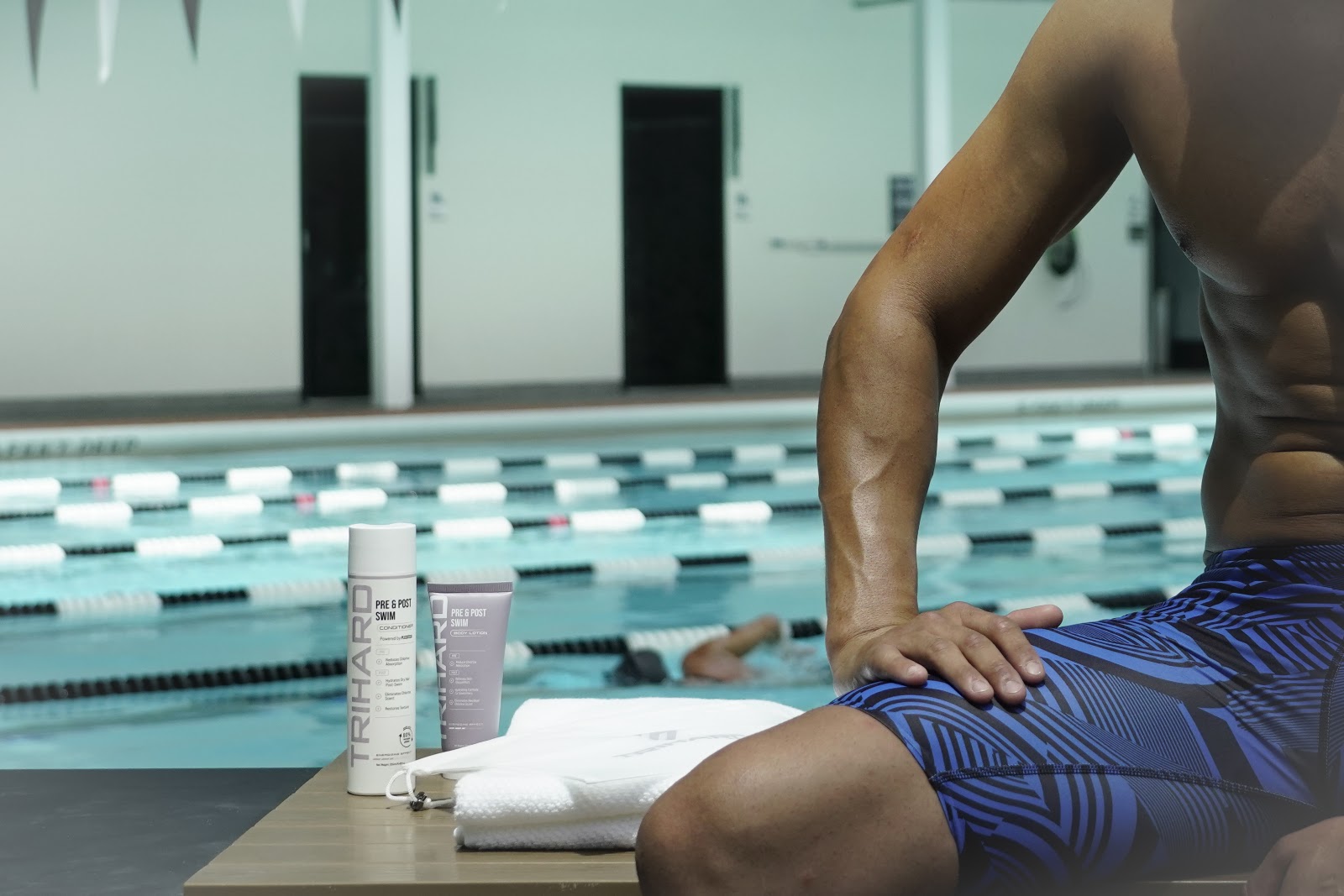
The most effective pre-swim routine takes under three minutes. Rinse your hair thoroughly with clean tap water at the poolside shower, then apply a generous amount of Chlorine Protection Conditioner from roots to ends. Leave it in — don't rinse. Pull hair into a low bun or braid, then add your swim cap on top for maximum coverage.

Add a Swim Cap for Double Defense
A swim cap alone doesn't waterproof your hair, but combined with a pre-applied conditioner it dramatically cuts down chlorine contact. Silicone caps offer a tighter seal than latex. This two-layer approach — conditioner plus cap — is what competitive swimmers rely on to maintain healthy hair through heavy training blocks.
Pre-Swim Protection Checklist
- Shower and fully wet hair with clean water before entering the pool.
- Apply Chlorine Protection Conditioner generously from root to tip.
- Do not rinse — leave the conditioner in as a protective layer.
- Secure hair in a braid or low bun to reduce surface exposure.
- Put on a silicone swim cap over the conditioned, tied-up hair.
- Rinse and re-treat with a dedicated swimmers shampoo immediately after your session.
Post-Swim Care Is Just as Critical
Rinse Within Minutes of Exiting the Pool
The longer chlorine sits on hair after your swim, the deeper it penetrates and the more damage it causes. Head straight to the shower and rinse thoroughly with warm water. Then apply a chlorine-removal shampoo to actively lift residual chemicals rather than simply diluting them. The Chlorine Removal Shampoo is formulated specifically for this purpose, helping to remove chlorine buildup that regular shampoos leave behind.

Follow With a Restorative Conditioner
After shampooing, rehydrate with another application of Chlorine Protection Conditioner. This post-swim application replenishes moisture lost during the session and helps smooth the cuticle back down. If you prefer a complete system, the The Hair Comb-O pairs a swimmers shampoo and conditioner designed to work together as a full aquatic hair-care routine. For those who want an all-in-one skin and hair solution, the Chlorine-Removal Care Kit covers every step from cleanse to condition.
Don't Forget Your Skin Post-Swim
Hair care is only half the equation. Chlorine strips your skin's natural moisture barrier just as aggressively as it affects your hair. Follow your post-swim hair routine with the Chlorine Removal Body Wash to help cleanse residual chlorine from skin, then lock in hydration with Chlorine Protection Body Lotion. If symptoms like skin irritation persist, spread, or worsen, see a doctor or dermatologist.

Special Considerations for Kids and Sensitive Hair
Children's Hair Is More Vulnerable
Kids' hair tends to be finer and more porous than adult hair, making it absorb chemicals faster. A gentler, swim-specific formula is essential. The Chlorine Protection Conditioner for Kids is designed to be both effective and gentle enough for young swimmers' delicate hair and scalp. Pair it with the Chlorine Removal Shampoo for Kids post-swim for a complete routine. The Skin & Hair Set for Kids bundles essentials into one convenient package.
High-Volume Swimmers Need a Stronger System
Triathletes and competitive swimmers training five or more days per week face cumulative damage that standard haircare simply can't address. A fully dedicated swim-care system — pre-swim conditioning, chlorine-removal shampooing, and post-swim deep conditioning — is non-negotiable at that volume. The Lucy's Bundle is built for serious aquatic athletes who need comprehensive coverage across hair and skin. For a broad full-body approach, the Chlorine-Free Skin Set rounds out your protection.
Frequently Asked Questions
Can I use regular conditioner before swimming, or do I need a swim-specific one?
Regular conditioner provides some barrier benefit, but swim-specific formulas like TRIHARD's Chlorine Protection Conditioner are engineered to hold up under repeated aquatic exposure and chlorine contact far more effectively.
How long should I leave the conditioner in before getting in the pool?
There's no minimum wait time — apply it right before you swim and leave it in. The goal is full coverage on every strand before chlorinated water makes contact.
Does pre-swim conditioner work for salt water swimming too?
Yes. Conditioner reduces moisture loss from osmotic salt-water exposure just as effectively as it buffers against chlorine, making it valuable for open-water swimmers and surfers alike.
What Customers Say
★★★★★
I’m a lap swimmer since the 1970’s and this is the only thing that works. I started using the TRIHARD line 3 years ago and my hair and skin no longer have chlorine damage. I also use the conditioner when I’m at the beach so my hair no longer fries from the salt. I’ve used numerous “designer” clarifying shampoos, deep conditioners, etc but nothing beats TRIHARD. If you actively swim, this is your best option. I buy and go through twice as much conditioner as shampoo since it is a pre and post treatment. IT WORKS! It saves your hair from breakage and drying out. I have fine hair, but now I have so much more hair than I used to, that I’ve let it grow longer and I can do more with it. Thank you TRIHARD.
★★★★★
Great for eczema! Chlorine causes my eczema to become inflamed, itchy, and makes my skin bubble and flake. It is so severe I have no hope of swimming again. At home, I have chlorine filters in my shower and bathroom sink But when I travel, the Tri-Hard conditioner gets all of the chlorine out so I don’t suffer. I use the Tri-Hard body wash too. They both smell great, and keep my eczema in check. Seriously I cannot live without these products
★★★★★
AMAZING product that protects my hair. I have long, thick, color treated hair. My stylist told me I need to pre-condition when swimming. After trying a "spray on" I found on Amazon that didn't do much, I am so glad to have found to have found this. A little goes a long way and my hair is protected from chlorine and my latex swim cap. Highly recommend.
Complete your swim-care routine
The products swimmers reach for to undo chlorine damage, head to toe.


Leave a comment