










How to Naturally Prevent Swimmer's Ear After Swimming in Chlorinated Pools
To naturally prevent swimmer's ear after swimming in chlorinated pools, the key is to remove trapped water and chlorine from your ear canal immediately after every swim. Tilt your head to each side, gently tug your earlobe, and use a clean towel to dry the outer ear. Keeping ears dry and clean disrupts the moist environment that allows bacterial growth — making these simple steps your first and best line of defence.
Why Chlorinated Pool Water Triggers Swimmer's Ear
How Chlorine Disrupts Your Ear's Natural Protection
Your ear canal has a naturally acidic environment that resists bacterial growth. Prolonged exposure to chlorinated pool water can wash away the protective earwax layer and alter that pH balance, leaving the delicate skin inside your ear vulnerable. When moisture lingers, bacteria and fungi find an ideal environment to multiply — which is the root cause of swimmer's ear (otitis externa). Regular swimmers are especially at risk because repeated exposure compounds this disruption over time, making prevention a consistent habit rather than a one-off fix.
Recognising the Early Signs Before It Gets Worse
Swimmer's ear often starts subtly: mild itching inside the ear canal, slight redness, or a feeling of fullness. As it progresses, you may notice pain when touching or pulling on the outer ear, increased itching, and some discharge. Catching it early is crucial. If you notice any of these symptoms developing, step up your drying and cleansing routine immediately. If symptoms persist, spread, or worsen, see a doctor or dermatologist. Early intervention keeps a minor irritation from becoming a painful infection requiring medical treatment.
Natural Prevention Habits for After Every Swim
The Drying Routine That Makes the Biggest Difference
The single most effective natural prevention strategy is eliminating trapped water immediately after swimming. Follow this checklist after every pool session:
- Tilt your head to each side and hop gently to encourage water to drain out naturally.
- Gently tug your earlobe downward while tilting your head to open the canal.
- Use the corner of a clean, dry towel to absorb moisture from the outer ear — never insert it into the canal.
- Use a hairdryer on the lowest, coolest setting held at arm's length for 20–30 seconds per ear.
- Avoid cotton swabs inside the canal, as they pack wax deeper and can damage protective skin.
- Wait until ears feel fully dry before putting in earbuds or hearing protection.
Natural Rinse Solutions and DIY Ear Drops
A widely recommended natural option is a homemade mixture of equal parts white vinegar and rubbing alcohol. The vinegar helps restore the ear canal's natural acidity, while the alcohol assists with drying residual moisture. A few drops applied after swimming — then allowing it to drain out — can be an effective preventive measure for many swimmers. Always ensure you have no existing ear damage, perforated eardrum, or ear tubes before using any ear drops. If you are unsure, ask a pharmacist or doctor about suitable over-the-counter options before trying any ear drop routine.
Removing Chlorine From Skin and Hair to Protect Your Whole Body
Why a Post-Swim Shower Is Non-Negotiable
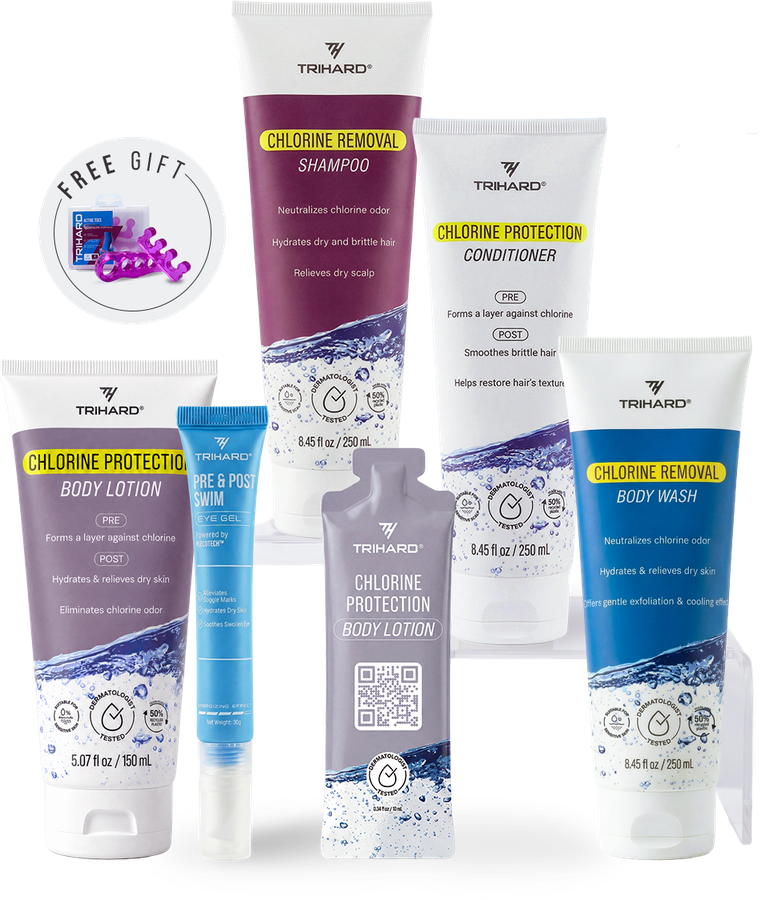
Chlorine doesn't just affect your ears — it strips moisture from your skin and hair, creating a cycle of irritation that a proper post-swim routine can break. Showering with a dedicated swim-care cleanser immediately after leaving the pool helps remove chlorine, pool chemicals, and contaminants from your skin before they cause lasting dryness or irritation. The TRIHARD Super Swimmer Body Wash is formulated specifically for swimmers to help remove chlorine and pool chemicals while cleansing and soothing skin. Pair it with the TRIHARD Super Swimmer Shampoo to cleanse chlorine from your hair and scalp after every session.
Protecting and Hydrating Skin After Chlorine Exposure
After cleansing, restoring your skin's moisture barrier is essential. Chlorine-exposed skin loses hydration rapidly, which can lead to dryness, flaking, and sensitivity around the ears and face. Using a hydrating moisturiser designed for post-swim skin helps replenish what chlorine strips away. The TRIHARD Super Swimmer Body Lotion is designed to hydrate and soothe skin after chlorine exposure, helping to restore comfort and softness. Apply it while skin is still slightly damp to lock in moisture effectively. This step protects the delicate skin around your outer ear as part of a complete post-swim routine.
Protective Gear and Long-Term Swimming Habits
Using Earplugs and Swim Caps Effectively
High-quality silicone or custom-moulded earplugs are one of the most reliable ways to keep water out of the ear canal during swimming. They don't have to affect your performance — many competitive swimmers use them routinely. Pair earplugs with a well-fitted swim cap to help keep them in place and to reduce overall water exposure to the outer ear area. Ensure your earplugs are cleaned and dried after each use to prevent them from becoming a source of bacteria themselves. Replace disposable foam earplugs regularly, and inspect silicone ones for wear and degradation over time.
Building a Consistent Pre- and Post-Swim Routine
Prevention is a habit, not a single action. Before swimming, consider using a water-resistant ear barrier product if you are highly prone to swimmer's ear. After swimming, commit to the full routine: drain, dry, rinse, shower with a swim-specific cleanser, and moisturise. Consistency is what separates swimmers who rarely deal with ear problems from those who struggle repeatedly. Adding the right swim-care products — like the TRIHARD Super Swimmer Conditioner for hair and the full TRIHARD body range — into your post-swim ritual makes the healthy choice the easy choice, session after session.
Frequently Asked Questions
Can I prevent swimmer's ear without using ear drops?
Yes. The most effective natural prevention methods don't require ear drops at all. Thoroughly drying your ears after every swim using the tilt-and-tug method, a hairdryer on a cool setting, and a clean towel is often sufficient for most recreational swimmers. Wearing silicone earplugs during swimming adds another layer of protection. Ear drops — whether homemade or store-bought — are a helpful additional tool, but consistent drying and gear habits form the foundation of prevention. If you want to add drops to your routine, ask a pharmacist or doctor about suitable over-the-counter options.
Is swimmer's ear caused by chlorine itself or by the water?
Swimmer's ear is primarily caused by trapped moisture in the ear canal that creates conditions for bacterial or fungal growth — the water is the main culprit. However, chlorine plays a contributing role by disrupting the ear canal's natural protective environment. It can remove earwax and alter the skin's pH, making the canal more susceptible to infection when water is present. So while chlorine doesn't directly cause swimmer's ear, it can lower your natural defences and increase your risk, particularly with frequent pool swimming. If symptoms persist, spread, or worsen, see a doctor or dermatologist.
How do I remove chlorine from my skin and hair to avoid irritation after swimming?
The most effective approach is to shower immediately after leaving the pool using products designed specifically for swimmers. Standard shower gels and shampoos are not formulated to break down chlorine and pool chemicals effectively. The TRIHARD Super Swimmer Body Wash and TRIHARD Super Swimmer Shampoo are designed to help remove chlorine, cleanse, and soothe skin and hair post-swim. Follow up with the TRIHARD Super Swimmer Body Lotion and TRIHARD Super Swimmer Conditioner to hydrate and protect after chlorine exposure.


Leave a comment