









Why Do Swimming Pools Make My Eyes Sting? It's Not Just the Chlorine
The burning, red eyes you get after swimming are almost never caused by chlorine alone. The real culprit is a chemical reaction between chlorine and organic matter — sweat, body oils, urine, and personal care product residue — that produces compounds called chloramines. Chloramines are highly irritating to the eyes, skin, and respiratory tract, and a pool with a strong "chlorine smell" is actually a sign of too many chloramines, not too much chlorine. Understanding this distinction changes how you protect yourself before, during, and after every swim.
What Actually Causes Eye Stinging in the Pool?
Chloramines: The Real Irritant
When free chlorine in pool water binds with nitrogen-containing compounds from swimmers' bodies, it forms combined chlorine — specifically monochloramine, dichloramine, and trichloramine. Trichloramine is the most volatile and irritating form, rising off the water surface and attacking the thin mucous membrane (the conjunctiva) that lines your eyes. A well-maintained pool with low chloramine levels causes far less eye discomfort than a poorly managed one, regardless of total chlorine concentration.

pH Imbalance Makes It Worse
Pool water with a pH that drifts below 7.2 becomes acidic, which disrupts the natural tear film of your eyes — whose pH sits around 7.4 to 7.6. Acidic water strips away that protective layer, amplifying the stinging sensation even when chloramine levels are moderate. A well-run pool maintains pH between 7.4 and 7.6, but outdoor pools, heavily used lap pools, and poorly managed facilities frequently fall outside this range.
Why Do Some Swimmers Get It Worse Than Others?
Pre-Existing Skin and Eye Sensitivity
Swimmers with dry eyes, contact lens wear, eczema, or sensitive skin have a compromised natural barrier to begin with, meaning chloramines cause faster and more intense irritation. Your tear film is thinner, your conjunctiva more reactive, and your skin's ability to buffer chemical exposure is reduced. These swimmers are also more likely to experience prolonged redness and puffiness after a session that extends well beyond the pool deck.

Product Residue Contributes to the Problem
Sunscreen, moisturizer, and conventional shampoos that aren't fully rinsed off before entering the pool react with chlorine and accelerate chloramine formation — worsening the very irritation you're hoping to avoid. This is why a proper pre-swim rinse isn't just pool etiquette; it directly reduces the chemical load in the water around you and the irritation you'll experience.
How Can You Protect Your Eyes and Skin Around the Pool?
Wear Goggles — Every Single Time
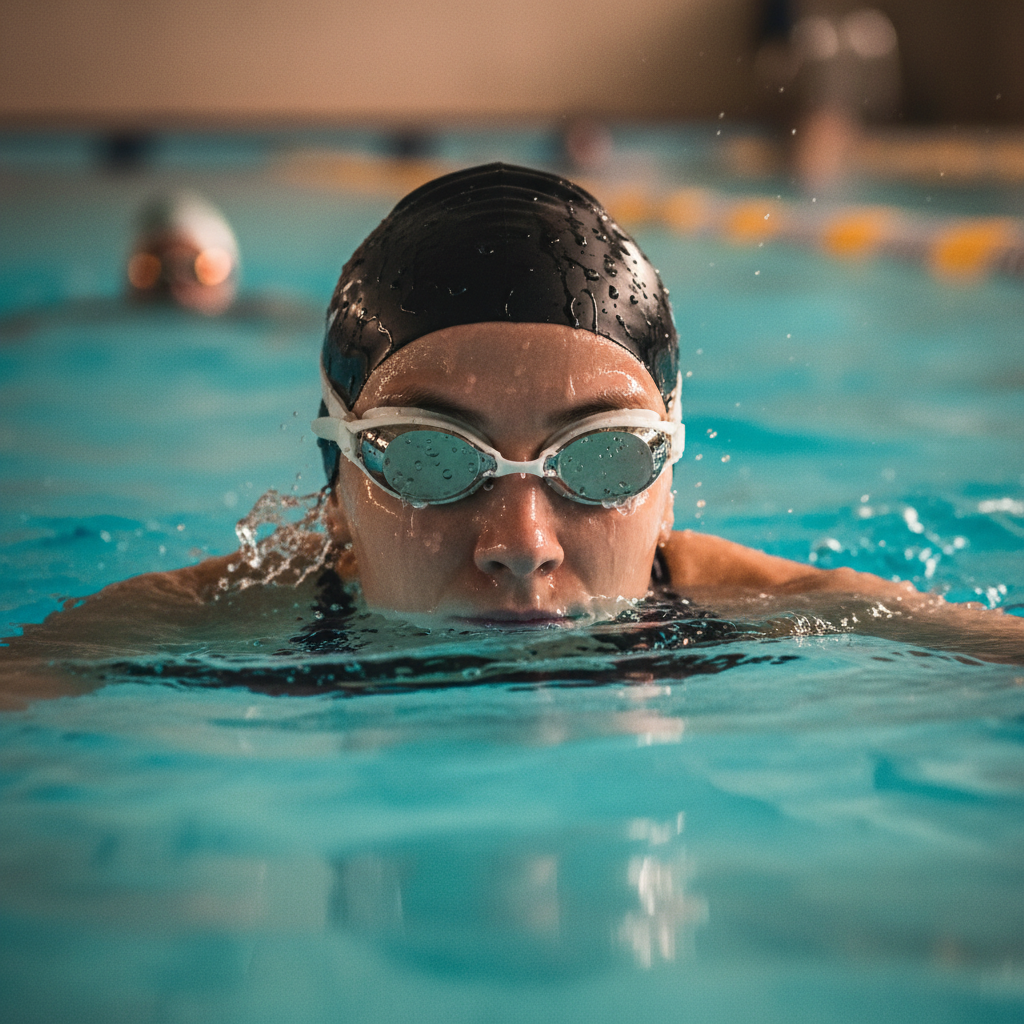
Properly fitted, sealed swim goggles are the single most effective tool for preventing eye irritation in the pool. They create a physical barrier between your eyes and pool water, eliminating direct chloramine exposure to the conjunctiva. Choose goggles with a low-profile seal that sit flush against your orbital bone — if they leave deep marks and cause pressure, they need adjustment.

Soothe the Under-Eye Area Before and After Swimming
The skin around your eyes is the thinnest on your body and highly susceptible to chloramine-driven dehydration and puffiness. Applying a targeted soothing gel before and after swimming helps condition this delicate zone. TRIHARD's Goggle Marks Soothing Gel is formulated specifically for swimmers to help hydrate and soothe the under-eye and goggle-contact areas — making it an essential part of any serious swimmer's post-swim routine.
What's the Right Post-Swim Routine for Irritation-Prone Swimmers?
Remove Chlorine From Skin and Hair Immediately
The longer chlorine and chloramines sit on your skin and scalp after a swim, the greater the potential for dryness and irritation. A purpose-built chlorine-removal wash is far more effective than standard soap at neutralizing and lifting these compounds. TRIHARD's Chlorine Removal Body Wash is engineered specifically for swimmers to help remove chlorine residue and leave skin feeling clean and refreshed — not stripped. For a complete post-swim skin solution, the Chlorine-Free Skin Set pairs the body wash with a targeted moisturizer to restore hydration after chlorine exposure.
Rehydrate Skin and Refresh After Every Session
After rinsing off chlorine, replenishing lost moisture is critical — especially around the eyes, face, and any areas prone to redness. TRIHARD's Cool & Fresh provides a refreshing, lightweight finish that helps calm and hydrate post-swim skin. For swimmers who want a full care kit they can take anywhere, the Variety Travel Kit – 32 Sachets puts every post-swim essential in compact, travel-ready form.

Quick Post-Swim Eye and Skin Protection Checklist
- Wear well-fitted goggles for every lap session — no exceptions.
- Rinse off thoroughly before entering the pool to reduce chloramine formation.
- Apply Goggle Marks Soothing Gel around the eye area after swimming to hydrate and soothe.
- Wash with Chlorine Removal Body Wash immediately after your session to lift chlorine from skin.
- Hydrate with Cool & Fresh to replenish moisture and leave skin refreshed.
- If symptoms persist, spread, or worsen, see a doctor or dermatologist.
Frequently Asked Questions
Is it safe to open my eyes underwater in a pool?
Opening your eyes underwater exposes the conjunctiva directly to chloramines and pH-imbalanced water, which accelerates irritation and redness. Wearing sealed swim goggles is strongly recommended to avoid this exposure entirely.
Can I be allergic to chlorine itself?
True chlorine allergies are extremely rare; most reactions swimmers experience are chemical irritation from chloramines rather than a genuine immune-mediated allergy. If you suspect an allergic reaction — hives, significant swelling, or respiratory symptoms — ask a pharmacist or doctor about suitable over-the-counter options for relief, and consult a doctor if symptoms persist.
Does the "strong pool smell" mean there's too much chlorine?
Counterintuitively, a strong chemical pool smell is a sign of too many chloramines — a byproduct of chlorine reacting with organic matter — not an excess of chlorine itself. A properly balanced pool with low chloramine levels actually has very little detectable odor.


Leave a comment