









Best Barrier Cream for Swimming: What to Use for Eczema & Sensitive Skin
The best barrier cream for swimming creates a physical shield between your skin and chlorinated water before you enter the pool. For eczema or sensitive skin, look for fragrance-free, hypoallergenic formulas rich in emollients that lock in moisture and reduce irritant absorption. Pairing a quality pre-swim barrier product with a thorough post-swim rinse and a dedicated chlorine-removal wash is the most effective routine for protecting reactive skin.
Why Swimmers With Eczema Need More Than Regular Moisturiser
Chlorine Disrupts Your Skin Barrier
Chlorine and pool chemicals strip away the skin's natural lipid layer — the very thing that keeps moisture in and irritants out. For people with eczema or sensitive skin, this disruption triggers dryness, redness, and flare-ups far faster than it would for non-reactive skin. Standard moisturisers weren't formulated to withstand full immersion in chemically treated water.

The Difference Between a Barrier Cream and a Regular Lotion
A barrier cream is designed to be occlusive — it sits on the surface of the skin and resists being washed away. Regular body lotions absorb quickly and offer almost no protection once you're submerged. A swim-specific barrier formula uses ingredients like shea butter, petrolatum, or plant-based waxes to create lasting defence during your session. Always apply it at least five minutes before entering the water.
How to Build a Pre-Swim Skin-Protection Routine
Apply Barrier Protection Before You Dive In
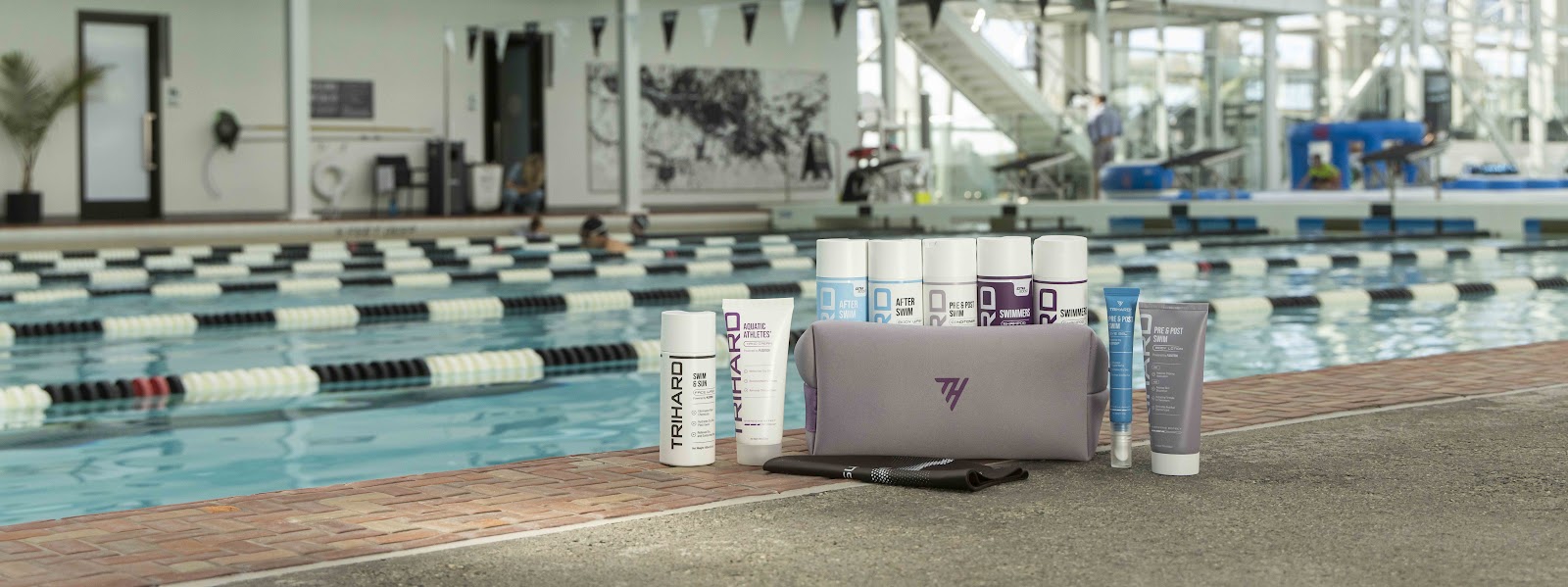
Apply your barrier cream or pre-swim lotion to all exposed areas — arms, legs, torso, and any patches of eczema — before you put on your swimsuit. Focus extra product on areas that flare most often, such as the backs of the knees or inner elbows. The Travel Kit - Pre & Post Swim Body Lotion is a compact, pool-bag-friendly option formulated specifically for swimmers who want skin hydration before and after every session.

Don't Skip Your Face and Neck
Facial skin is thinner and more reactive, making it especially vulnerable to chlorine irritation. Use a soothing gel around the eye area to address the rubbing and pressure from goggles. The Goggle Marks Soothing Gel is designed to hydrate and soothe the delicate periorbital skin that takes the most goggle-related stress. Apply it before your swim to help protect the area and again after to refresh.
The Post-Swim Routine That Makes or Breaks Sensitive Skin
Rinse and Cleanse Within 10 Minutes of Leaving the Pool
Every minute chlorine stays on your skin, it continues to break down your barrier. Rinsing immediately after you exit the pool is the single most impactful thing you can do. Follow that rinse with a dedicated chlorine-removal body wash — the Chlorine Removal Body Wash is formulated to help neutralise and remove chlorine residue while gently cleansing without over-stripping sensitive skin. It's a specialist step that standard shower gels simply can't replicate.

Lock Moisture Back In Immediately After Cleansing
Post-swim, your skin is clean but temporarily more permeable — making it the perfect moment to apply a rich moisturiser or emollient. Pat skin dry rather than rubbing, then apply your barrier cream or emollient within three minutes while skin is still slightly damp. If symptoms persist, spread, or worsen, see a doctor or dermatologist. For prescription-level skin concerns, ask a pharmacist or doct
What Customers Say
★★★★★
I’ve been really enjoying the products and have already recommended them to friends. However, I didn’t receive the shower bag that was meant to be included with my purchase. When I contacted support, I was informed that it is out of stock and will not be restocked. Because of this, I’d suggest updating the website to reflect the current situation. The Lucy Bundle still lists the swim/shower bag as included, which is misleading since it is no longer being provided. This is my only minor concern in an otherwise very positive experience.

★★★★★
Absolutely LOVE the products!! My hair smells amazing after my swims packed full of moisture! The eye gel has eliminated the time of my goggle marks keeping my under eye supple! The body wash is a creamy light scrub that lightly cools the body down. I will definitely rebuy ⭐️⭐️⭐️⭐️⭐️

★★★★★
I've had issues with dry skin after swimming in the past so I ordered this bundle. It is amazing! Skin felt hydrated, hair was wonderfully soft. I swim on my lunch break so it was great to be able to go back to work with no goggle marks, no itchy skin, and no chlorine smell.
Frequently Asked Questions
Why is a barrier cream better for swimming than a regular lotion?
Barrier creams are occlusive and designed to sit on the surface of the skin to resist being washed away by pool water. In contrast, regular lotions absorb quickly and offer almost no protection once you are submerged.
When should I apply my pre-swim barrier cream?
You should apply your barrier cream to all exposed skin at least five minutes before entering the pool to ensure it creates an effective shield.
What is the most effective post-swim routine for sensitive skin?
Rinse your skin within 10 minutes of leaving the pool to stop chlorine from breaking down your skin barrier. Follow this with a dedicated chlorine-removal body wash and apply a rich moisturizer to slightly damp skin within three minutes.
How can I protect my face and eye area from chlorine and goggle irritation?
Facial skin is thinner and more reactive, so you should use a soothing gel specifically designed for the eye area before your swim. Applying this product helps hydrate and protect the delicate periorbital skin from the pressure and rubbing caused by goggles.


Leave a comment