









Can I Use Chlorine-Neutralizing Eye Drops If I Swim Frequently?
Yes, chlorine-neutralizing eye drops are generally safe for frequent swimmers and can provide real relief from redness, dryness, and irritation caused by chlorinated pool water. However, they address symptoms after the fact. The smarter long-term strategy combines eye drops with protective goggles, a dedicated post-swim eye-care routine, and a full chlorine-removal regimen — so your eyes, skin, and hair all recover properly after every session.
Why Chlorine Irritates Swimmers' Eyes
The Chemistry of Pool Water on Your Eyes
Pool water doesn't just contain chlorine — it contains chloramines, the chemical compounds formed when chlorine reacts with sweat, oils, and other organics. Chloramines are the real culprits behind that signature burning sensation. They strip the thin tear film protecting your eye's surface, leaving the delicate conjunctiva exposed, inflamed, and vulnerable to further irritation with every subsequent dip.

Why Frequent Swimmers Feel It More
The more often you train, the less time your tear film has to fully recover between sessions. Competitive swimmers who log multiple sessions per day or week experience cumulative dryness and redness that casual lap swimmers rarely notice. Over time, a compromised tear film can make your eyes more sensitive to pool water — not less — creating a cycle that worsens without proper care.
How Chlorine-Neutralizing Eye Drops Work — and Their Limits
What the Drops Actually Do
Chlorine-neutralizing eye drops work by rinsing and diluting residual chloramines on the eye's surface while replenishing lost moisture. Most are preservative-free, isotonic formulations that mimic your natural tear film. They're excellent at providing immediate, short-term comfort — reducing redness, flushing out irritants, and rehydrating the conjunctiva within minutes of leaving the pool.

Where Eye Drops Fall Short
Eye drops cannot protect your eyes during a swim, nor can they address the chlorine absorbed by the surrounding skin, eyelids, or lashes. Persistent or severe symptoms — such as prolonged blurry vision, significant swelling, or discharge — may signal something more serious than chemical irritation. If symptoms persist, spread, or worsen, see a doctor or dermatologist. For prescription or medicated drop options, ask a pharmacist or doctor about suitable over-the-counter options.
Building a Complete Post-Swim Eye and Skin Routine
Step One: Protect and Rinse Immediately After Swimming
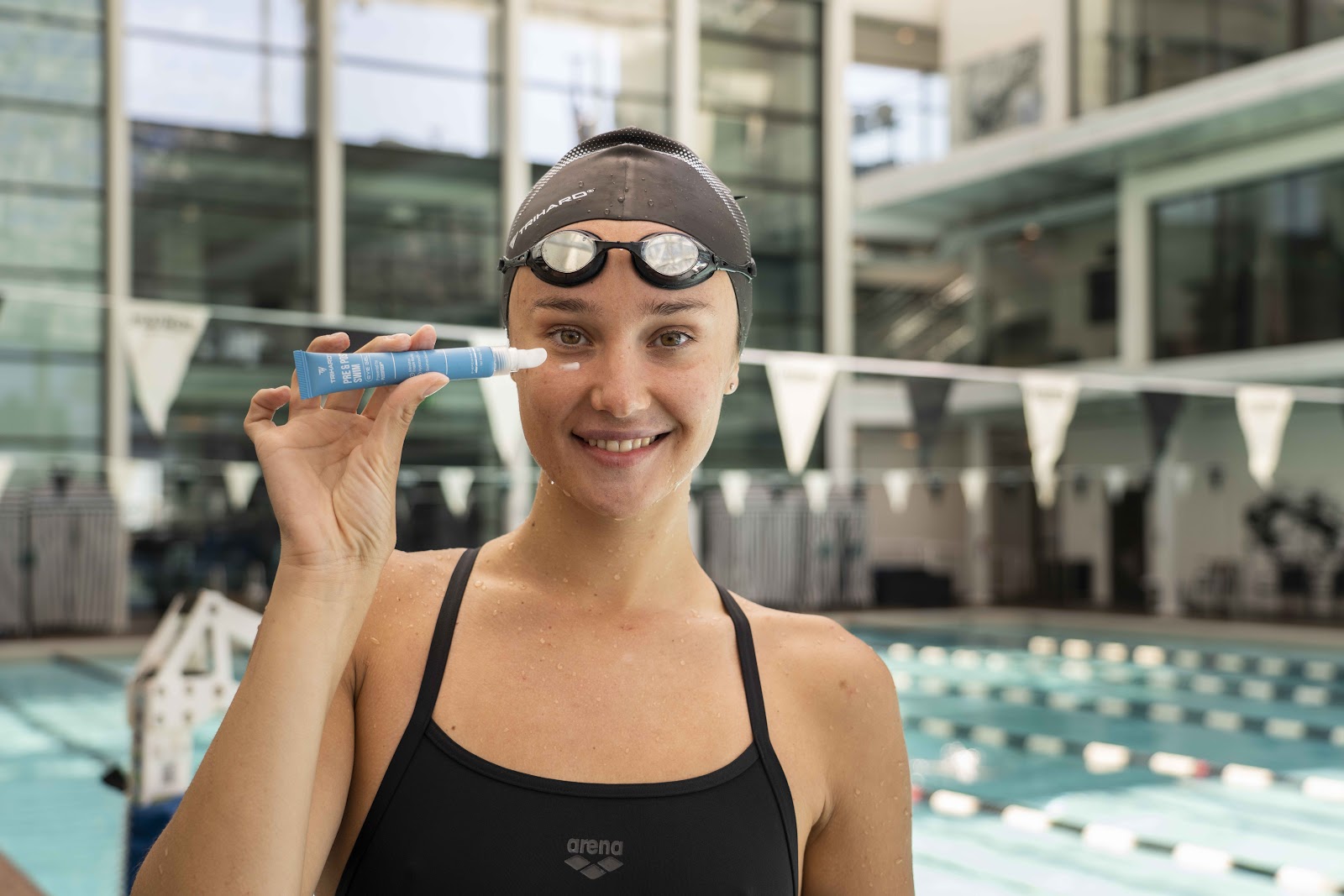
The golden window is the first five minutes after you exit the pool. Rinse your eyes with clean water or your chosen drops right away. For the delicate skin around your eyes — where goggle marks, puffiness, and chlorine residue tend to accumulate — apply Goggle Marks Soothing Gel. This targeted gel is formulated to hydrate and soothe the periorbital area that no body wash can reach.

Step Two: Full Chlorine Removal From Head to Toe
While your eyes recover, chlorine is still sitting on your skin and scalp. Wash immediately with Chlorine Removal Body Wash, TRIHARD's swimmer-specific formula designed to help remove chlorine and chloramine residue from skin after pool sessions. Follow with Chlorine Removal Shampoo and Chlorine Protection Conditioner to cleanse and rehydrate hair that's taken the same chemical hit as your eyes.
Your Post-Swim Checklist
- Exit the pool and rinse eyes with clean, fresh water immediately
- Apply chlorine-neutralizing drops to flush and rehydrate the eye surface
- Dab Goggle Marks Soothing Gel around the eye area to soothe irritated skin
- Shower with Chlorine Removal Body Wash to cleanse skin of chloramine residue
- Shampoo and condition with swimmer-specific formulas to restore hair health
- Apply a hydrating body lotion like Chlorine Protection Body Lotion to lock moisture back in
Choosing the Right Products for Your Swim Frequency
For Adults Who Train Regularly
If you swim several times a week, a comprehensive kit makes consistency easy. The Chlorine-Removal Care Kit bundles the core post-swim essentials — shampoo, conditioner, and body wash — into one swimmer-focused set. For a broader routine that also protects your skin barrier, the Chlorine-Free Skin Set adds targeted skin hydration to the equation. Pair either kit with Goggle Marks Soothing Gel and your eye-drop routine for full-body coverage.

For Young Swimmers and Families
Children's eyes and skin are more sensitive to chloramine exposure than adults', making a consistent post-swim routine even more important for young athletes. TRIHARD's Skin & Hair Set for Kids includes gentle, swimmer-specific formulas — complemented by the Chlorine Removal Shampoo for Kids, Chlorine Removal Body Wash for Kids, and Chlorine Protection Conditioner for Kids — to help cleanse and hydrate after every pool session. Always check that any eye drops you choose are approved for use in children, and consult a pediatrician if irritation persists.
Frequently Asked Questions
Can I use chlorine-neutralizing eye drops before swimming as a preventive measure?
Most chlorine-neutralizing drops are designed for post-swim use; applying them before entering the pool typically offers minimal protection. Your best pre-swim defense is well-fitted, watertight goggles that keep pool water away from your eyes entirely.

How often can I safely use eye drops after swimming?
Preservative-free drops can generally be used after every swim session without issue, but for specific dosing guidance or if you use other eye medications, ask a pharmacist or doctor about suitable over-the-counter options.
Will TRIHARD's Goggle Marks Soothing Gel replace eye drops?
Goggle Marks Soothing Gel is a cosmetic skincare product for the skin around the eyes — it is not an eye drop and should not be applied directly into the eye. Use it alongside, not instead of, your eye drops.
What Customers Say
★★★★★
This eye gel is the BEST! My son had horrible goggle marks that would not go away even with a prescription eye cream, but TriHard is amazing and cleared under and around his eyes in just a few days. He applies it approximately 10 mins before a swim practice and it lasts the whole practice (about 2 hours). I would highly recommend
★★★★★
This product does seem to work. I swim for over an hour at a time and my googles always leave marks and puffiness under my eyes. I used this product the last couple of times and noticed a big improvement. I’ll continue to use it.
★★★★★
It actually works. I was skeptical but it really does minimize my goggle marks!


Leave a comment