









Why Does Chlorine Make My Skin Dry and Itchy, and What Helps?
Chlorine strips your skin's natural oils and disrupts the protective barrier that keeps moisture locked in. The result is that tight, itchy, sandpaper feeling after every swim. The good news is that a targeted pre- and post-swim routine — built around proper chlorine removal and deep hydration — can keep your skin comfortable no matter how often you train.
What Chlorine Actually Does to Your Skin
It Destroys Your Skin's Natural Moisture Barrier
Your skin's outermost layer, the stratum corneum, is held together by natural lipids that act like mortar between bricks. Chlorine is a powerful oxidizing agent that dissolves those lipids on contact, leaving the skin barrier compromised. Once that protective layer is weakened, transepidermal water loss accelerates and dehydration sets in fast.

It Triggers Irritation and Inflammation
Beyond dryness, chlorine reacts with sweat and organic matter to form chloramines — chemical byproducts that sit on your skin long after you leave the pool. These compounds are a leading cause of post-swim redness, itching, and irritation. Sensitive skin types and people with pre-existing skin conditions are especially vulnerable. If symptoms persist, spread, or worsen, see a doctor or dermatologist.
The Pre-Swim Step Most Swimmers Skip
Hydrating Before You Get In the Water
Dry skin absorbs chlorinated water faster than hydrated skin. Applying a moisturizing layer before you swim creates a partial buffer that slows chlorine absorption. Chlorine-Free Skin Set is designed for exactly this purpose — helping you prep your skin so it enters the water in the best possible condition.

Why Pre-Swim Prep Changes the Post-Swim Picture
When your skin barrier is supported before chlorine exposure, the damage done during a session is measurably reduced. Think of it like applying sunscreen before sun exposure rather than after. Consistent pre-swim care compounds over time, meaning long-term swimmers who prep see far less chronic dryness than those who only treat skin after the fact.
How to Actually Remove Chlorine After Swimming
Rinsing with Water Is Not Enough
A quick shower rinse dilutes chlorine but does not fully remove it from your skin. Chlorine and chloramines bond to proteins in the outer skin layer and require a dedicated cleansing formula to break that bond. Using a regular body wash often compounds the problem because most formulas strip even more moisture from already-compromised skin.

Use a Dedicated Chlorine-Removal Body Wash
Switching to a specialist formula makes a measurable difference. Chlorine Removal Body Wash is formulated to actively cleanse chlorine and pool chemicals from skin while keeping the hydration balance intact. For swimmers who train at different facilities, the Travel Kit - After-Swim Body Wash Extra Boost makes it easy to keep the routine consistent on the road.
Your Post-Swim Checklist
- Rinse off immediately after leaving the pool — don't let chlorine sit and dry on your skin.
- Use a chlorine-removal body wash within the first five minutes of exiting the water.
- Pat skin dry gently — don't rub, which further aggravates a weakened barrier.
- Apply a hydrating body lotion while skin is still slightly damp to lock in moisture.
- Treat any irritated areas around goggle marks with a soothing gel to calm redness fast.
Restoring Hydration and Long-Term Skin Health
Moisturizing Is Non-Negotiable for Swimmers
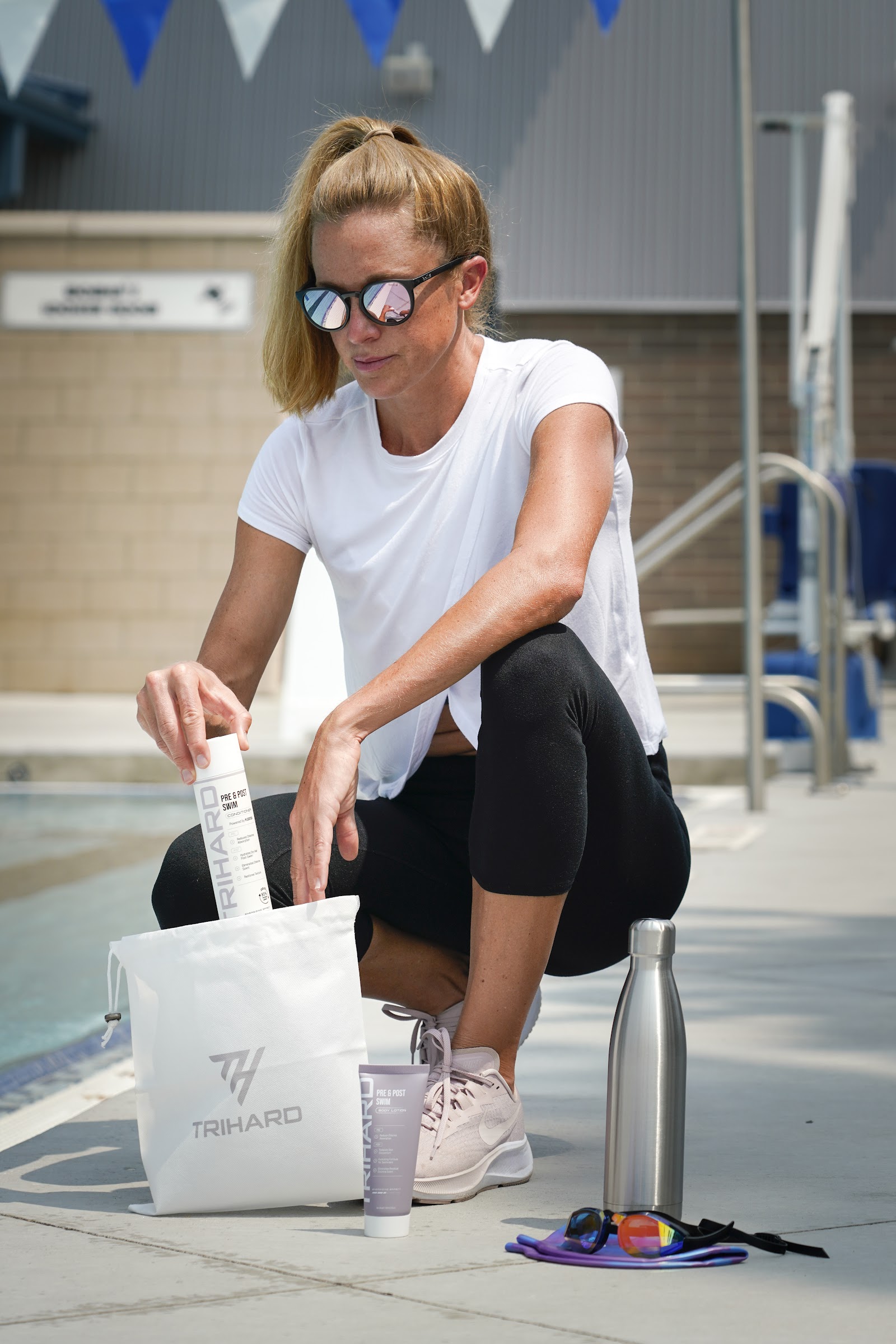
After chlorine removal, your skin needs immediate replenishment. The Travel Kit - Pre & Post Swim Body Lotion is built for the swimmer's dual need: prepping skin before exposure and restoring softness afterward. Applied consistently after every session, a dedicated swim lotion helps prevent the cumulative dryness that builds up over a heavy training block.

Don't Forget Eyes, Face, and Hair
Goggle pressure combined with chlorine exposure leaves the delicate skin around your eyes especially prone to irritation and tightness. Goggle Marks Soothing Gel targets that specific zone to help soothe and refresh the skin around your eyes post-swim. For full head-to-toe care in one convenient package, Chlorine-Removal Care Kit bundles the essentials so nothing gets missed after training.
Scaling Your Routine for High-Volume Training
Swimmers training five or more days a week face cumulative barrier damage that a single product can't fully address. The The Tri-Care bundle is designed for high-frequency swimmers who need a complete, layered approach to skin protection. For younger swimmers dealing with the same issues, Skin & Hair Set for Kids offers a gentle, purpose-built routine their skin can handle. If you want to sample the full TRIHARD system before committing, the Variety Travel Kit - 32 Sachets lets you try every product format across a full training cycle. If symptoms persist, spread, or worsen, see a doctor or dermatologist.

Frequently Asked Questions
Can chlorine cause a skin rash, or is it just dryness?
Chlorine can cause both dryness and a contact irritation rash in some swimmers. If a rash develops or spreads, ask a pharmacist or doctor about suitable over-the-counter options and see a dermatologist if it persists.
How soon after swimming should I shower and moisturize?
Shower as soon as possible — ideally within five minutes of leaving the pool. Apply moisturizer while your skin is still slightly damp to maximize hydration absorption.
Is TRIHARD suitable for daily swimmers?
Yes. TRIHARD products are formulated specifically for the demands of daily swim training, providing consistent chlorine removal and hydration without over-stripping the skin barrier.


Leave a comment